


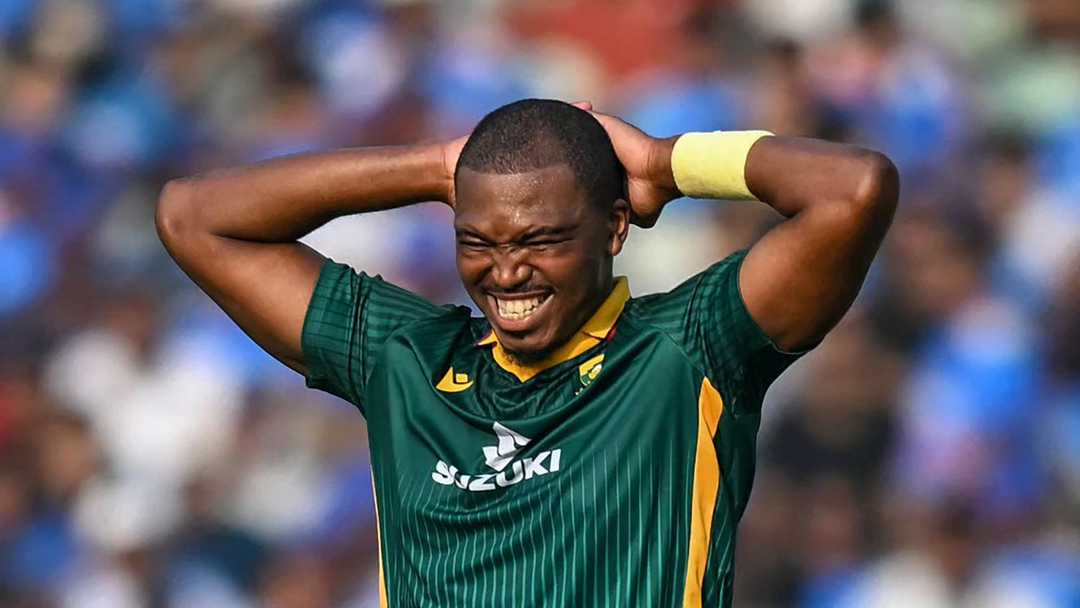
India, South Africa go deep – but also too wide too often
South Africa conceded 23 extras in the first ODI in Ranchi on Sunday. That's 17 more than India—who won by 17 runs. In Raipur on Wednesday, South Africa gave away 24 extras. This time India conceded only six fewer, and South Africa won by four wickets with four balls to spare.
Of the 47 extras South Africa have gifted in the series, eight were leg byes. The other 39—82.98%—were self-inflicted: wides and byes.
Wides also cost extra deliveries. South Africa bowled 10 extra balls in Ranchi. Without those, India would have totaled 334/5 instead of 349/8. South Africa were dismissed for 332, so they still would have fallen short.
In Raipur, South Africa bowled 15 extra deliveries. Without those, India would again have made 334/5, not 358/5.
India bowled 11 wides and a no-ball in Raipur, where South Africa needed eight off the last two overs. Corbin Bosch and Keshav Maharaj knew they could get them in singles, and did. Bosch said: "I just said to Kesh, 'Let's run hard. We still need less than a run-a-ball. Let's stay nice and calm, run nice and hard, and we'll be able to pick off the runs.'"
That approach worked, but if India hadn't bowled those extra deliveries, they likely would have won. The contrast is clear from Sunday, when India bowled just three wides.
This might seem like nit-picking—an accounting exercise over appreciating fine players. Who focuses on extras when Ruturaj Gaikwad scored his first ODI century (105 off 83), or when Virat Kohli added 102 off 93 to his 135 from Sunday—his 53rd ODI hundred and 11th consecutive century in the format? Or when Aiden Markram kept South Africa in it with 110 off 98, supported by half-centuries from Matthew Breetzke and Dewald Brevis in a 92-run stand off 64 balls? Or when Tony de Zorzi's hamstring injury with 31 needed off 31 balls might have been decisive? Or when South Africa completed the joint-highest chase against India, the second-highest in an ODI in India, and South Africa's third-highest ever—and highest away?
Good luck picking a player-of-the-match from that. It was Markram. "I always take lessons from the previous game," he said. "We knew it was going to swing early [in Ranchi] and we took up that challenge. We knew that if we had gotten off to a semi-decent start we could chase it down."
Instead, South Africa were 11/3 inside five overs on Sunday. Through that lens, they did well to get close. On Wednesday, Markram and Temba Bavuma put on 101 off 96, then Markram and Breetzke added 70 off 55, followed by the Breetzke-Brevis partnership.
"It was very similar today and we learned from our mistakes," Markram said. "I'm proud of the boys for getting us over the line. There were moments of pressure, but they stayed calm and got us the win."
Other South African teams might have choked in similar situations.
"We have got eight really good batters and Kesh as well to do his thing," Markram said. "You feel that freedom as well. The boys are putting their hands up in the middle order and now the top order has to start contributing."
Who's counting—as long as somebody gets the runs, especially with such dash and drama?
But you want to talk about wides? Yes. Because you don't want to give free balls and runs, especially when margins are this slim.
No one can say for sure the results would have changed with more discipline. But a smaller target would have reduced South Africa's urgency on Sunday. Likewise, India could have maintained more pressure on Wednesday with tidier bowling.
That might have made all the difference in both games.
Related Posts
 Islamabad United vs Peshawar Zalmi,7th Match,Pakistan Super League 2026,2026-03-31 15:00 GMT
Punjab Kings vs Gujarat Titans,4th Match,Indian Premier League 2026,2026-03-31 15:00 GMT
Islamabad United vs Peshawar Zalmi,7th Match,Pakistan Super League 2026,2026-03-31 15:00 GMT
Punjab Kings vs Gujarat Titans,4th Match,Indian Premier League 2026,2026-03-31 15:00 GMT
 Redback-to-back: With Shield glory, South Australia become pride of state, again