


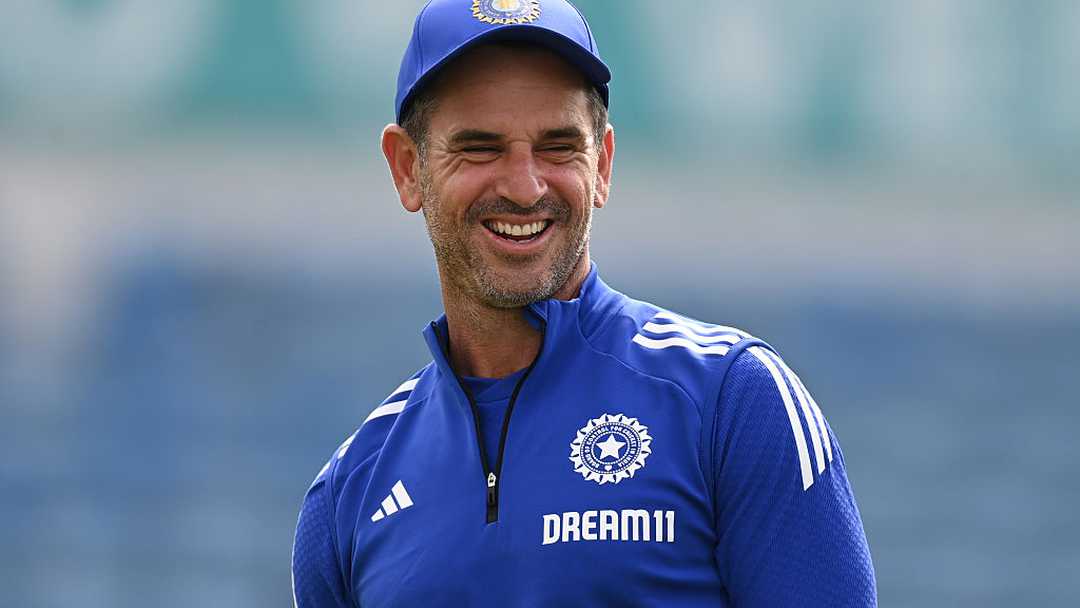
Starting two hours early is a solution for dew: ten Doeschate
India have lost the last 20 tosses in ODIs—a sequence with a statistical probability of one in a million. As they head into the series-deciding third ODI in Visakhapatnam, the toss is set to play a crucial role due to heavy dew in the second innings.
"The biggest challenge is the disparity between batting first and batting second," said India's assistant coach Ryan ten Doeschate. "It's becoming more prominent in one-day cricket."
In Raipur, South Africa chased down 359 as India's bowlers struggled with a wet ball. "The dew factor is so big. It's obviously not our fault, but it is our responsibility to find a way around that," ten Doeschate admitted.
He suggested an external fix: "If you started two hours early, that is a solution." However, with many stakeholders involved, he called it "a futile conversation."
In Visakhapatnam, where teams batting second won all five games during the recent Women's World Cup, the dew could be decisive. "I'll be very surprised if anyone wins the toss and decides not to chase here," ten Doeschate said.
Despite the toss pressure, ten Doeschate emphasized focusing on the process. "We try to assess what's going to be a good score, and the batting unit has to go about getting it."
He added, "When a few losses start stacking up and performances have been below what we expect, there's a slight desperation to win the series tomorrow."
India now battle expectation and desperation to ensure their fate isn't left to the toss of a coin.
Related Posts
 Islamabad United vs Peshawar Zalmi,7th Match,Pakistan Super League 2026,2026-03-31 15:00 GMT
Punjab Kings vs Gujarat Titans,4th Match,Indian Premier League 2026,2026-03-31 15:00 GMT
Islamabad United vs Peshawar Zalmi,7th Match,Pakistan Super League 2026,2026-03-31 15:00 GMT
Punjab Kings vs Gujarat Titans,4th Match,Indian Premier League 2026,2026-03-31 15:00 GMT
 Redback-to-back: With Shield glory, South Australia become pride of state, again