


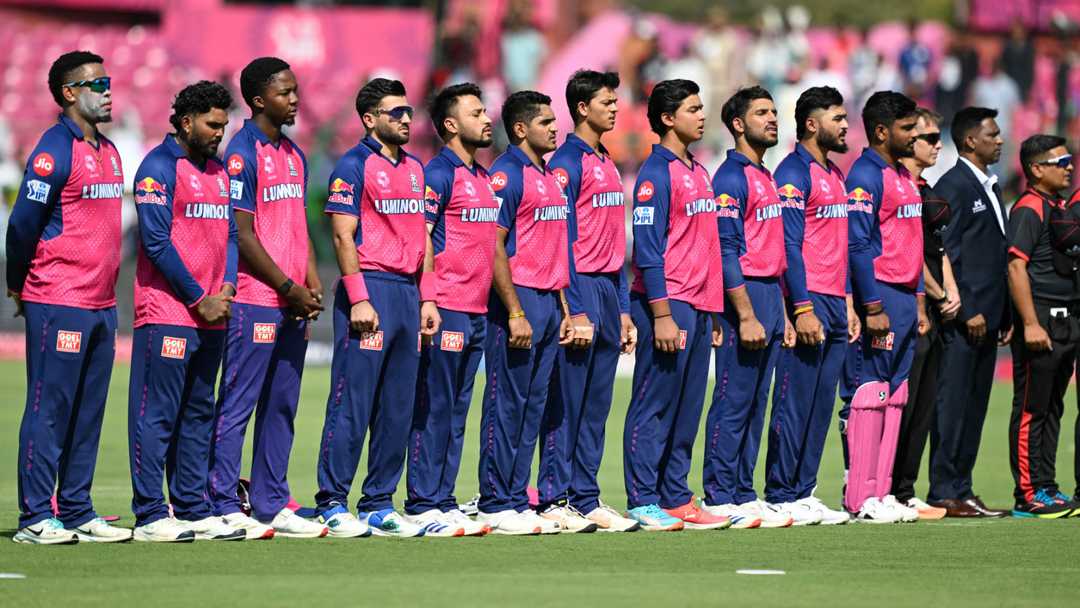
How Rajasthan Royals Use Data and AI
Rajasthan Royals' Director of Strategy & Analytics, Giles Lindsay, details the franchise's data-driven approach to recruitment, match management, and the growing role of AI.
Synergy Between Analytics and Scouting
The process for identifying domestic talent is now highly systematized. The analytics team creates a data profile for players from India's numerous T20 competitions before scouts are even dispatched. This profile establishes benchmarks and key performance indicators.
All scouting reports and observations are stored in a centralized data warehouse, preventing information loss. Extensive video scouting is conducted remotely long before seeing a player in person. Trials have evolved from discovery tools to final confirmation stages, ensuring decisions aren't based on a single day's performance. The goal is a "triple lock" alignment between scouts, analysts, and coaches.
Building a 'Data Profile'
The process began by using data science to understand what it takes to win the IPL: required points, par scores, and game phases. This analysis helped attach specific numbers to different roles, such as a finisher or powerplay bowler. These data-led profiles are shared with scouts and coaches to create precise filters for recruitment.
Managing Key Player Departures
The departure of Sanju Samson created significant gaps in the squad's balance. The franchise's annual review process, initiated in 2021, helps identify expected and unexpected squad gaps. To mitigate Samson's loss, Rajasthan Royals focused on plugging other gaps by acquiring Ravindra Jadeja and Sam Curran through trade.
Internal options like Dhruv Jurel (wicketkeeping) and Vaibhav Suryavanshi (opening cover) also provide solutions. The auction philosophy revolves around constructing an optimal squad within a finite budget and player pool, accounting for new rules and market trends.
Strategic Trades: Jadeja and Curran
After a season of close losses in IPL 2025, analysis revealed an over-reliance on overseas bowling. The acquisitions of Jadeja and Curran aimed to create better balance and batting depth. Jadeja adds batting, elite fielding, and experience, while Curran offers all-round skills. These moves provide greater squad flexibility alongside the redeployment of existing players like Suryavanshi and Jurel.
Retention Decisions
Letting go of stars like Jos Buttler, Trent Boult, Yuzvendra Chahal, and R Ashwin ahead of the mega auction was challenging. The decision was framed within a three-year cycle, prioritizing a long-term squad rebuild. The analytics department provided information to support these difficult choices, which were made with the full franchise cycle in mind and input from the new coaching staff.
The Role of AI
AI is now integral across multiple domains:
- Process Simplification: Initially used to streamline data science tasks like coding and app creation.
- Training & Development: Tools like Str8Bat (a bat sensor) provide metrics on batting. For example, Vaibhav Suryavanshi increased his timing efficiency by 12% over four months using this feedback. FullTrack.ai automatically clips and tags training deliveries, providing instant data on ball speed, spin, swing, and pitch location.
- Simulations: AI runs millions of simulations for auctions, lineup constructions, trade evaluations, and in-game scenarios. It models probabilities and game states to support decision-making, not to replace cricketing judgment.
- Live-Match Analytics: A live dashboard inputs match data to review against pre-built models. It helps track if a team is ahead or behind the expected run rate based on context (balls, wickets, resources). This provides objective clarity for proactive decisions.
The Evolving Analyst Role
Analyst functions have rapidly automated. Tasks like video clipping and report generation are now handled by AI tools, saving significant time. This allows human analysts to focus on interpreting significant patterns and maintaining crucial interactions with coaches and players—elements AI cannot currently replicate. This shift is evident in both pre-match opposition analysis and post-match reporting.
Player Reception to Data
Player comfort with data has increased since 2021. The key is understanding individual preferences and tailoring information accordingly. The goal is to support decision-making, not dictate actions. Some players, like Ben Stokes, Stuart Broad, and Riyan Parag, actively seek extensive data. Others, like Yuzvendra Chahal, are more instinctive.
Bowlers, such as Sandeep Sharma and Tushar Deshpande, are particularly engaged, using analytics to objectively prepare for matchups and study opposition batters. The approach is careful with young talents like Vaibhav Suryavanshi, avoiding information overload to let them play their natural game. The philosophy remains: these players reached elite levels independently; analytics aims to provide marginal gains and help them be even better.
Related Posts
 MS Dhoni likely to miss first two weeks of IPL 2026
 Zimbabwe Women U19 vs South Africa Women U19,3rd Place Play-off,Nigeria Invitational Women’s T20I Tournament, 2026,2026-03-28 09:00 GMT
 Australia go 1-0 up with comfortable win despite Stafanie Taylor century