


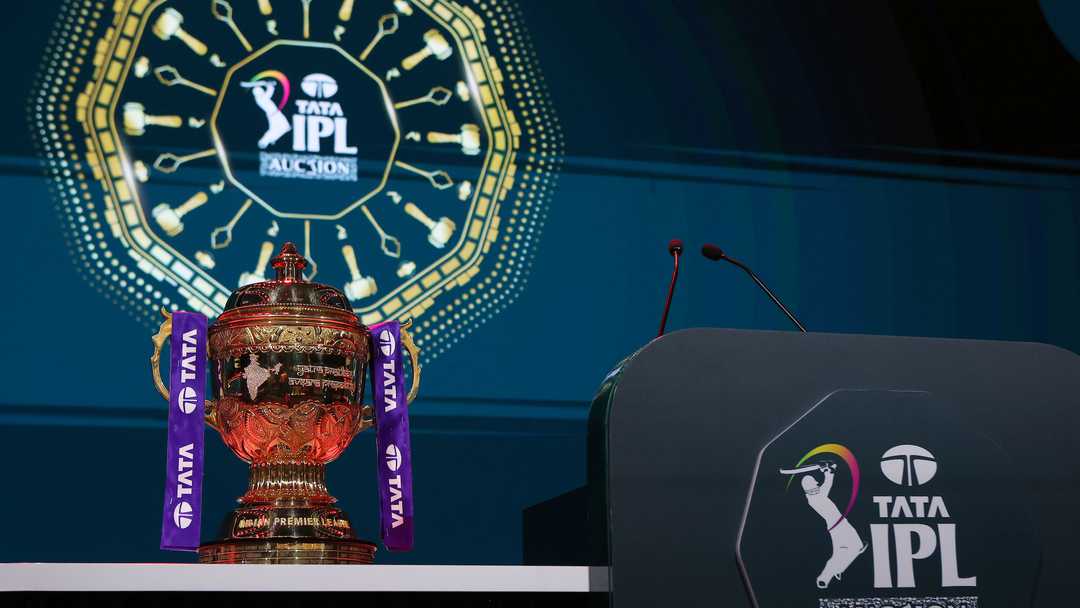
Tie-breaker explained: How closed-door bidding will settle IPL auction ties
A tie in cricket leads to a Super Over; in football, to a penalty shootout. In the IPL auction, it triggers a silent, closed-door bidding war—a scenario possible in a mini-auction, like the one in Abu Dhabi on Tuesday (December 16).
Past players like Kieron Pollard, Shane Bond (2010), and Ravindra Jadeja (2012) were secured through tie-break secret bids, but rules have since been updated.
Whether a tie-break occurs in Abu Dhabi is conjecture, but the BCCI has detailed the rules to franchises. With 10 teams now, multiple franchises may vie for a player without sufficient funds.
Tie-break trigger:
- One franchise makes a final bid (the "Last Bid")—its maximum within the 2026 salary cap.
- No other franchise makes a higher bid.
- At least one other franchise could have matched the Last Bid but lacks funds for the next increment.
The auctioneer then asks eligible franchises if they wish to make a "Matching Bid" equal to the Last Bid.
Outcomes:
- If no Matching Bid, the player is sold to the Last Bid franchise.
- If one or more Matching Bids occur, the player is sold at the Last Bid amount, and a tie-break procedure determines the signing franchise.
Tie-break procedure:
- BCCI invites all Matching Bid franchises and the Last Bid franchise to submit a silent written bid (the "Tiebreak Bid") on a provided form.
- The Tiebreak Bid is an amount in Indian rupees, payable in one instalment to BCCI (not the player), to secure the player for IPL 2026.
- This amount is separate from and in addition to the Last/Matching Bid, not deducted from the salary cap, with no limit.
- BCCI opens the Tiebreak Bids; the highest bidder wins the player.
- If two or more highest bids are equal, those bidders repeat the process until a winner emerges. Tiebreak Bid amounts are not announced.
The winning franchise signs a 2026 IPL Player Contract with the player at the Last/Matching Bid amount and must pay its Tiebreak Bid to BCCI within 30 days of the auction.
Related Posts
 MS Dhoni likely to miss first two weeks of IPL 2026
 Zimbabwe Women U19 vs South Africa Women U19,3rd Place Play-off,Nigeria Invitational Women’s T20I Tournament, 2026,2026-03-28 09:00 GMT
 Australia go 1-0 up with comfortable win despite Stafanie Taylor century