


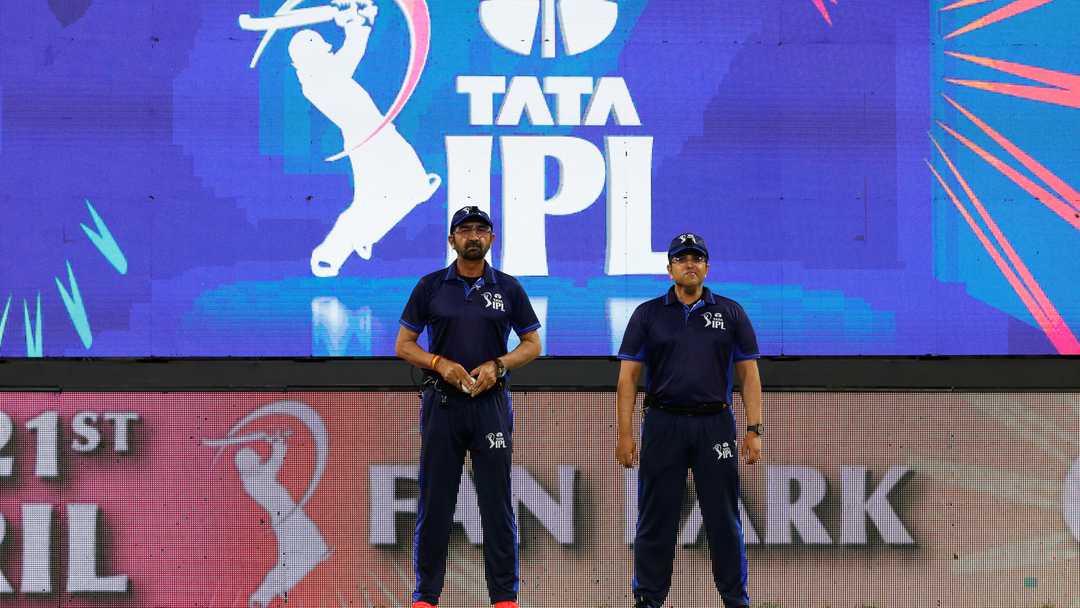
BCCI defers call on revising umpiring structure
The BCCI's Apex Council has deferred a decision on a proposal to restructure the domestic umpiring system, currently divided into four groups.
The Umpires Committee, comprising Amish Saheba, K Hariharan, and Sudhir Asnani, presented a case for consolidating the 186 umpires into two groups instead of the current four-tier system (A+, A, B, C). They argued that performance disparities and payment inequities necessitate the change.
Key arguments from the Umpires Committee:
- Performance Gap: In recent seasons, umpires from lower groups (B and C) have often outperformed those in the A+ and A groups, leading to better-performing umpires from lower tiers being assigned key knockout matches.
- Payment Disparity: The current fee structure creates an imbalance; umpires in A+ and A groups earn ₹40,000 per day, while those in B and C earn ₹30,000. This means two umpires officiating the same match can receive different pay for identical work, with lower-paid umpires sometimes being the better performers.
- Ineffective Promotion System: The existing promotion/demotion system between groups is not functioning optimally, failing to elevate consistently better-performing umpires from the lower ranks.
Proposed Reforms:
The committee's formal proposal includes:
- Scrap the four-group system. Place all umpires into two alphabetical groups of 90 and 96, with match assignments based strictly on performance.
- Implement a biennial promotion/demotion of 20 umpires between the two groups.
- Standardize the daily fee at ₹40,000 for all umpires. Top performers assigned to knockout matches could receive an enhanced fee of ₹50,000 per day to foster healthy competition.
Supporting Recommendations:
- Overhaul the umpire assessment system, giving 75% weightage to Match Referee reports and 25% to the Umpires Committee's review.
- Upgrade outdated recording and camera equipment (reportedly 15 years old) used for performance evaluation.
- Establish a system to assess Match Referees themselves, as their evaluations are foundational for umpire development.
- Identify and mentor high-potential umpires, following models used in the WPL and IPL.
Current Context & Next Steps:
The BCCI is considering forming a separate committee to examine the proposed structural and payment revisions. The matter is currently "kept in abeyance."
- Current Group Breakdown: A+ (10 umpires), A (20), B (58), C (99, including 26 new inductees).
- Retirements: Three umpires will retire this year upon turning 60, with several others across groups nearing retirement age.
Related Posts
 Redback-to-back: With Shield glory, South Australia become pride of state, again
 Shubman Gill and the art of control
 Green to play as pure batter for short period after minor back complaint