


WPL 2026: The next big chapter in India's world domination plans
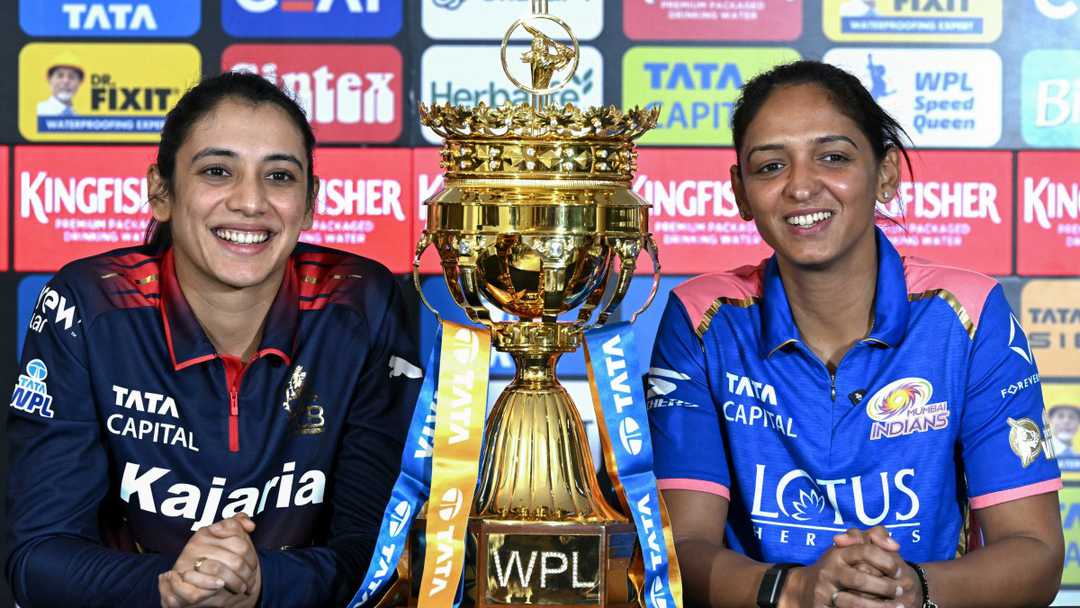
Smriti Mandhana and Harmanpreet Kaur, captains of two popular Women's Premier League franchises, took centrestage on the eve of the 2026 tournament opener at DY Patil Stadium. On their return to the venue of the 2025 World Cup final, they shared a light-hearted moment, their jokes picked up by microphones.
This time, they faced a simpler setup: a desk, cameras, microphones, sponsor logos, and the WPL trophy. The focus was on setting the stage for the league's fourth edition.
For Gwalior's 22-year-old Anushka Sharma, the WPL is a target. She altered her training last year, facing hundreds of balls daily to improve her range-hitting, seeing it as the fastest route to catch scouts' eyes and secure a place in the tournament, a stepping stone to the national team.
Kashvee Gautam has been closely observing Sophie Devine in training, taking mental notes.
Kiran Navgire, 33, adopted a new diet and fitness regime after last season, aiming to elevate her batting to match her former overseas UP Warriorz teammates. The results were visible in domestic tournaments.
Three years ago, Mandhana and Harmanpreet also fronted the league's launch, shouldering the burden of drawing crowds and dismissing notions that Indian women's cricket lacked depth.
The WPL's initiation promised to strengthen Indian women's cricket globally, developing domestic and international players. Three editions later, India had a World Cup trophy, ending a 50-year wait.
What does Indian cricket desire from WPL 2026? A T20 World Cup title? Or something beyond?
Minutes after winning the 2025 World Cup, Amanjot Kaur set a clear vision: "We have created history. This is just the start. Indian cricket is going to be at the next level. We are going to dominate all over the world in every format."
If Amanjot's vision is to take flight, WPL 2026 is where it begins. It will test whether her peers—both World Cup winners and aspirants—share that belief. Will Indian players challenge overseas counterparts more aggressively? Will they cross the finish line with greater confidence?
For Indian cricket to take that step, players must level up in fitness, fielding, and power-hitting, while bench strength increases. As seen with Navgire, Anushka, and Kashvee, that realization is present. For others, WPL 2026 could be the first major stage to witness such change.
A larger ecosystem is needed to support young girls aspiring to emulate their idols. But can one tournament bear that burden? How transformative can 10 days of preparation and three weeks of cricket be, especially with tight turnarounds and a focus on immediate results?
Regardless of franchise coaches and owners' statements, developing Indian cricket isn't their core vision. Player scouting and development are inadvertent outcomes of their involvement in women's cricket business and brand positioning.
This involvement has yielded immediate results.
When WPL began, only Renuka Singh, Meghana Singh, Arundhati Reddy, and Shikha Pandey were Indian seamers with international experience. Since then, Kranti Goud, Saima Thakor, and Titas Sadhu have broken through after handling pressure.
Similar trends are seen elsewhere: Kashvee Gautam, Sayali Satghare, and Amanjot Kaur as seam-bowling all-rounders; Minnu Mani, Saika Ishaque, Shreyanka Patil as spinners. In three seasons, 19 players made their India debut after featuring in WPL, from 17-year-old G Kamilini to 33-year-old S Asha (only six Indians have debuted without WPL experience since).
This inadvertent outcome has pushed players to level up, with benchmarks within reach. As Harmanpreet noted, WPL isn't just a stepping stone for juniors but also provides seniors with exposure and pressure situations to improve.
If the goal is domination—to validate that the semifinal win over Australia wasn't a fluke and the final victory wasn't an anomaly—WPL 2026 will be that start. The World Cup win has offered optimism that world domination is within sight.
This elevation is most believable to Mandhana and Harmanpreet, who have endured lows and led highs, becoming faces of this change. In a league largely captained by Australians, they stand as the only winners of the world's most-watched women's cricket league.
"We really want to sit back and say that we are the best team in the world," Mandhana said. "We still have a lot to improve on. I am sure WPL is going to bridge that gap. In coming years, we want to dominate every tournament, not just one or two. Every WPL gets us closer."
Harmanpreet added, "We are not satisfied with just one World Cup. We have so much cricket coming up. Every time we take the field, we want that winning mindset. It's good to see other players also speaking about being champions all the time. That shows WPL's impact.
"Players are out of their comfort zones, working hard, playing against and with overseas players, learning from them. That gap we used to feel in international cricket isn't there anymore. WPL has had a lot of impact. As a team, we are setting bigger goals."
In 2026, as a new era begins, Indian cricket's flagbearers seek more helping hands in the quest for world domination.
Schedule:
- DY Patil Stadium, Navi Mumbai: January 9-17 (11 league matches)
- BCA Stadium, Kotambi: January 19-February 5 (9 league matches + 1 playoff match)
Match Timings:
- Double-headers: Gujarat Giants vs UP Warriorz (January 10) and Mumbai Indians vs UP Warriorz (January 17) start at 3:30 PM.
- All other matches start at 7:30 PM.
Related Posts
 Melbourne Renegades vs Melbourne Stars,30th Match,Big Bash League 2025-26,2026-01-10 08:15 GMT
Pakistan U19 vs Bangladesh U19,2nd Match,ICC U19 World Cup Warm up Matches 2026,2026-01-10 07:30 GMT
Brisbane Heat vs Sydney Thunder,29th Match,Big Bash League 2025-26,2026-01-10 05:00 GMT
Melbourne Renegades vs Melbourne Stars,30th Match,Big Bash League 2025-26,2026-01-10 08:15 GMT
Pakistan U19 vs Bangladesh U19,2nd Match,ICC U19 World Cup Warm up Matches 2026,2026-01-10 07:30 GMT
Brisbane Heat vs Sydney Thunder,29th Match,Big Bash League 2025-26,2026-01-10 05:00 GMT