


Right risk at right time: Afghanistan's batters urged to take smarter options
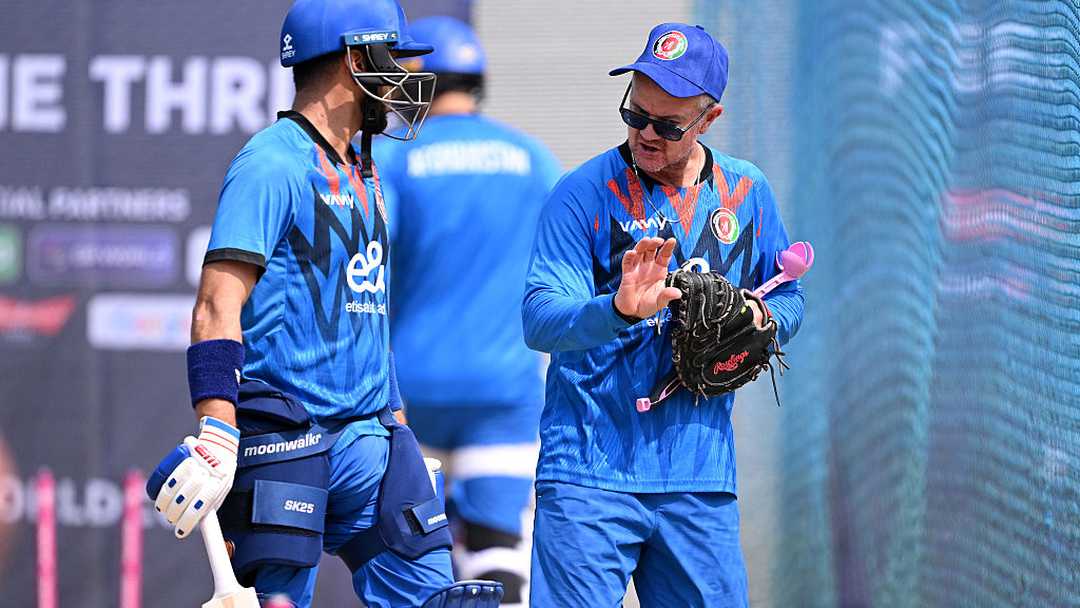
Afghanistan batting coach Toby Radford said his batters need to understand that taking very high risks early in the innings only puts the team under pressure.
Afghanistan, semifinalists in 2024, have lost to New Zealand and South Africa in this T20 World Cup and are on the verge of an early exit. They were on course for victory against South Africa while chasing 188, with Rahmanullah Gurbaz well set. The match slipped away once Gurbaz was dismissed, with Darwish Rasooli falling in the same over.
Although the contest went into two Super Overs, Radford felt the decisive moment was that quick double-wicket collapse. He added the team has gone back to the drawing board to reassess their approach.
"T20 is a game of risk—how much risk you take, what risk you take, and when you take it," Radford told Cricbuzz. "You don't want to be taking really high risk very early on, ideally, because you put yourself under pressure. The discussions we've tried to have are about taking the right risk at the right time."
"What we've often talked about is having a key batter well set at the wicket, maybe on fifty, sixty, forty or whatever. When the last fifteen overs come, you want a batter in there who's going well. It could be Darwish, it could be Gurbaz, it could be Ibrahim.
"If you've got a set batter in and you've still got some wickets in hand, it allows you in that last five overs to be really explosive. We generally average about ten or eleven an over in the last five. But you don't want to be going into the last five with seven down, because you're not going to get ten an over. If you're three or four down, I'd like to think you'd get ten or eleven an over most times."
Radford also stressed the importance of avoiding back-to-back wickets, saying they create enormous pressure. He believes someone at the crease must take responsibility for rebuilding the innings after a setback.
"I wouldn't call it an anchor role. If you lose two or three quick wickets, somebody's job is to rebuild. Somebody's job is to build a partnership again and get you started again. Someone has to take that on.
"What you try not to do is lose what we call back-to-back wickets. You don't want two new batters at the wicket at any one time, because it slows you down. If you lose a wicket, try to build and get the new player in quickly, try to rebuild a partnership quickly so you can start again. That's the common sense of the person at the crease, assessing the situation and playing accordingly.
"We are trying to avoid back-to-back wickets. They make it difficult. They just slow you down for a few balls while somebody gets back in and gets used to the conditions."
Related Posts
 India vs Pakistan,27th Match, Group A,ICC Men’s T20 World Cup 2026,2026-02-15 13:30 GMT
 Lockie Ferguson granted paternal leave, to miss Canada match
 Markram hails ‘comfortable’ cruise to win