


How Australia sleepwalked out of the World Cup
As unnecessary overthrows go, this was it. As moments that sum up forgettable World Cup campaigns go, this was certainly it.
It was the first delivery of the 16th over in Oman's innings. When Glenn Maxwell picked up a ball hit straight back at him and flung it towards the wicketkeeper. The throw was off-target and ricocheted towards Adam Zampa at short fine-leg, only for the leg-spinner to let the ball slip through his legs, conceding a single.
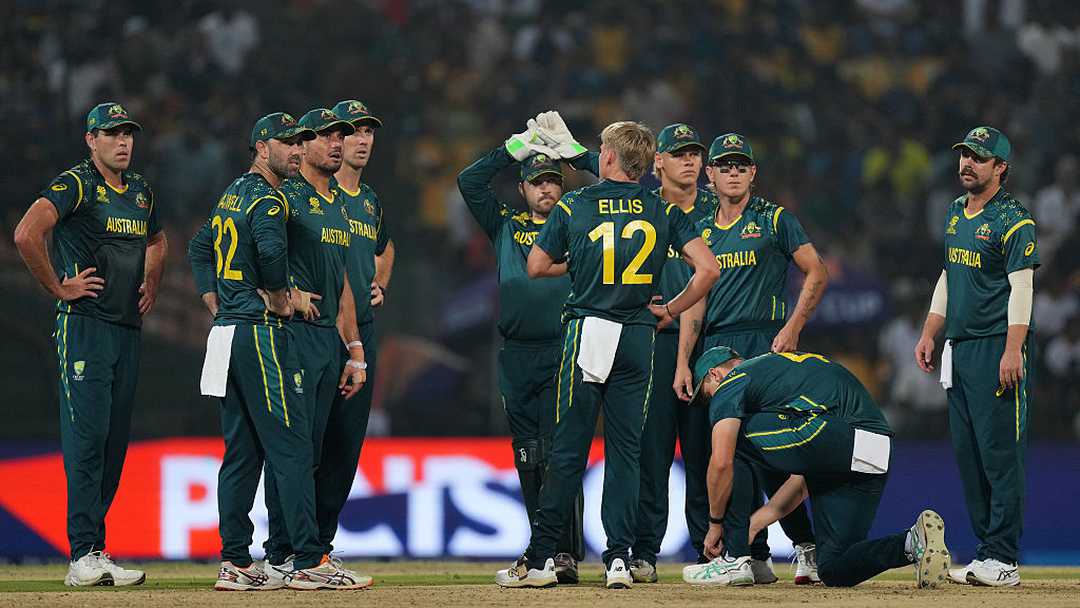
The reactions put the moment into context. Zampa looked away. Maxwell looked away. So did every other Australian on the field. It had literally no bearing on Australia's hopes in the World Cup. Those had been extinguished a couple of days before Mitch Marsh's team took the field in Pallekele for the final league encounter of Round 1—the deadest of rubbers.
Maxwell cleaned up the stumps a couple of deliveries later. But there was no celebration. Just like there wasn't for any wicket that fell. Australia were always going to try and get out of this one as quickly as they could. To put an end to their painful stay in Sri Lanka.
Their 2026 T20 World Cup story had come to an end 15 days earlier than expected. They'd been among three Test nations to bow out at the preliminary stage.
There's merit in calling this an Australian team's worst ever World Cup performance. To not qualify when you're up against Zimbabwe, who didn't even qualify for the last edition, and Sri Lanka, who have had an ordinary record in the format recently. This takes nothing away from how comprehensively both thrashed Australia. But it explains the scale of the debacle.
While most of Australia slept, the former champions' hopes went to bed prematurely. The criticism back home has been fierce. It's felt less like nuanced post-mortems, and more like people gathering around a car wreck piping in with opinions.
In a way, it's been a reflection of the passing interest many Australian cricket fans have in the T20I team's fortunes. Mostly because it's been behind a paywall and not on free-to-air television since 2018-19. Also because most of Australia's away bilaterals have been at odd hours.
Maybe the rapid frequency of these T20 World Cups has something to do with it, but it's probably more to do with Australia's overall failure to dominate this format as they have the others. Since 2012, Australia have only made the semifinal stage once, in 2021 when they won.
It's likely not many would have been stirred if Australia were knocked out in the Super 8s. Just like in 2024, a largely forgettable campaign that barely got a mention. So it was either going to take winning the title against the odds or an embarrassing exit like this for the tournament to get mainstream attention.
So where did it all go wrong? To completely undermine their lead-up would be unfair. They won 16 out of 20 games before the current summer. They then lost 2-1 to India in a rain-affected series and 3-0 in Pakistan with a depleted team.
They were the third best team behind India and South Africa in the 18-month period between World Cups. Their run was built on an array of power-hitters—a top 7 that on paper would be the envy of opponents. With Travis Head and Mitch Marsh opening, Cameron Green in the form of his life at No. 3, followed by Maxwell, Josh Inglis, Tim David, and Marcus Stoinis. David's emergence at No. 4, where he averaged 49 at a strike rate of 197 in 2025, seemed to give them an edge previous teams lacked.
Sadly, it ended up as the perfect storm. A bunch fell out of form, like Maxwell, Green, and Inglis, or returned from injury like David. Australia lost the secret sauce before the party began.
Add injuries to Pat Cummins and Josh Hazlewood, with Mitchell Starc retired from the format. For a decade, selectors had dialled those three for every ICC white-ball tournament. With Cummins and Hazlewood missing the entire World Cup, Australia relied on their second rung of fast bowlers led by Nathan Ellis. Adam Zampa carried an injury into the tournament and before his 4/21 against Oman looked a shell of himself. You wonder how much the lack of Hazlewood—and the pressure he builds—affected him. Zimbabwe's batters sat on Zampa's spell; Sri Lanka's Pathum Nissanka took him on.
Despite a great start against Ireland, Ellis couldn't lead the attack as expected. It showed as Australia managed only two wickets each against Zimbabwe and Sri Lanka in 38 overs. Rarely had an Australian attack looked more toothless at a World Cup.
That brings into question the bench strength of Australia's bowling attack in T20Is. There are also questions about whether this is a stark indicator of where the BBL's standards sit regarding batting quality and how it has advanced.
While Ellis has proved his worth globally and is elite at this level, Xavier Bartlett and Ben Dwarshius were found wanting. BBL performances are viewed through a different lens for IPL auctions now. Gone are the days a Ben Dunk or D'Arcy Short would get fast-tracked into the IPL purely on BBL knocks. It's the same with bowlers. Unless you have a proven record in other franchise leagues or internationally, expensive BBL pick-ups have stopped. Especially since 2021 when Jhye Richardson and Riley Meredith were bought for significant money but barely made an impact, being let go before the next season.
These are holistic issues Cricket Australia and the national selectors will have to deal with.
It also didn't help that the team never looked settled due to injuries and external attention over a non-selection. Steve Smith's shadow hung over their campaign before it started. The irony of the legendary batter flying in to Sri Lanka and being a passenger on the bench through the hasty exit added to the abjectness.
For now, the "forensic review" selector Tony Dodemaide said will be undertaken should be interesting. But the question remains how many fans and stakeholders will pay heed or even notice. And for how long. Footy season is nearly here, and as many in the "T20s don't matter" camp say, "who cares, we've already won the Ashes this summer".
As was evident on the faces of every Australian player in Pallekele, it will hurt for a long time. This does matter. For as misadventures in a World Cup go, this was it.
Related Posts
 Incessant rain washes out New Zealand-Pakistan clash
 IPL matches at Chinnaswamy not a done deal yet