


The many lives of RPICS
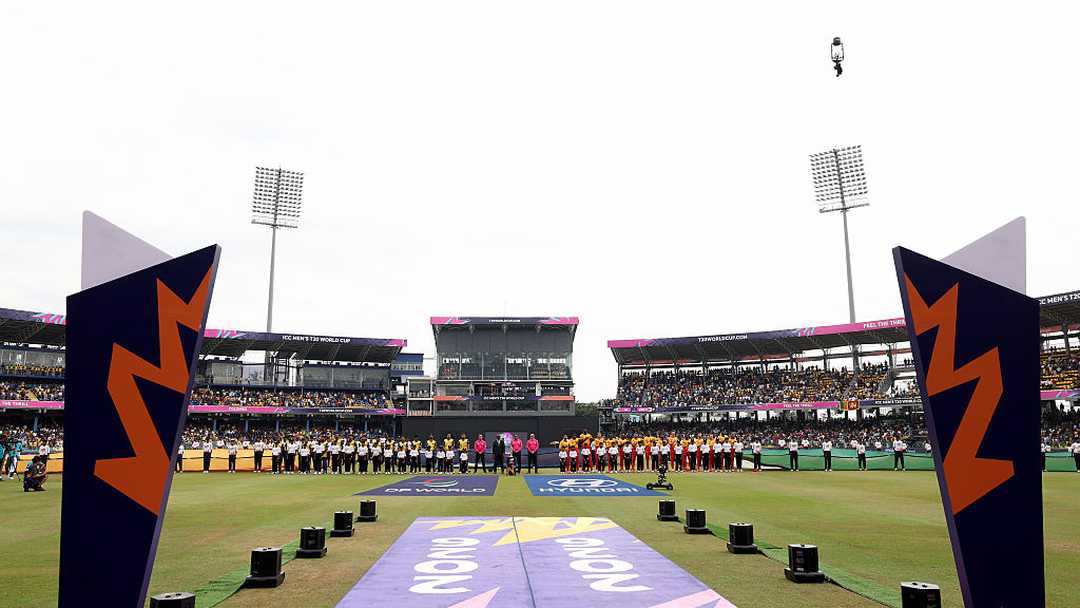
R. Premadasa Stadium sits in a part of Sri Lanka that rarely makes it onto postcards. Set along Khettarama Temple Road, the stadium is built on what was once a swampland beside a monastery. The lanes leading to the gates are narrow, the markets around crowded and unvarnished. It feels nothing like the stately, tree-lined approach to SSC, P. Sara Oval or the Colombo Cricket Club Ground.
Built by Ranasinghe Premadasa, the stadium was established as a floodlit alternative to the elite SSC and has always carried multiple identities. The pitches here at this T20 World Cup have done the same in 22 yards.
Through the first four matches of this tournament, the surface regularly slowed in the second innings, rewarding teams that batted first with four straight wins. Then Zimbabwe chased 179, one of the highest successful pursuits at the venue, and the old reputation resurfaced. For years, this was considered a chasing ground; each of the last eight matches before the World Cup were won by the chasing side. The first four matches here suggested otherwise.
Captains have been left guessing. Dasun Shanaka chose to chase against New Zealand in a must-win fixture, backing early tackiness. But the ball kept turning. Mitchell Santner expected a fresh surface to offer less turn, only to find it "spin more than what both teams thought."
Salman Agha looked at a "tacky" strip against India and chose to bowl, convinced the "first few overs would assist the bowlers." They turned out to be the best time to bat. So against New Zealand, Agha reversed course but the result did not reverse with him.
From a distance, the conditions can look straightforward. Premadasa has seen more wickets fall to spin than any other venue this tournament. Spinners have bowled the highest share of overs here. The average turn has topped the charts. But even that summary hides detail.
Matt Henry's wobble seam beat Pathum Nissanka with the first ball on a night expected to be all about grip and turn. Blessing Muzarabani and Brad Evans picked seven of the 10 wickets to fall in Zimbabwe's win over Australia. It has not been all spin. It has been about reading what is in front of you.
After failing to chase Sri Lanka's 163, Paul Stirling spoke of familiarity with the venue offering a "slight edge" against Australia. Ireland couldn't chase once again. Seamer Nathan Ellis summed up RPICS well: "It's probably more the unknown of what you're gonna get here. I've been here a few times now and can be a mixed bag at times."
The boundaries add another layer. In Sri Lanka's loss to New Zealand, the square boundaries differed by 13 metres. Santner spoke about being "smarter in using the bigger side." Later, from 84 for 6, he lifted his team, targeting the shorter 75-meter boundary.
After that defeat, Shanaka called for flatter wickets for better long-term planning and power hitting. Premadasa has not obliged. In hindsight, most pitches have been slow even compared to other city grounds. What has varied is interpretation. Teams have tried to impose their template but the ground has insisted on its own terms.
For fans thronging the Premadasa, cricket has been simply about the cricket.
There is something almost old-fashioned about that insistence. The slower you bowl, the more it has turned. The stock ball has mattered again. In an age obsessed with pace and variation, this has been a reminder that basics still have teeth.
The layers extend beyond the square. The soundscape of prayer and drumbeat, the restless energy in the stands, the bands that play through adversity—it has felt fuller for certain must-win contests than for marketed global showpieces, a reminder that cricket here is simply all about cricket.
Perhaps the supporters have deserved more comfort from their team. Perhaps the uncertainty beneath their feet has sharpened each disappointment. But in a tournament often defined by power and predictability, R. Premadasa Stadium has offered something richer: a version of T20 cricket that bends but does not flatten, that asks players to think as much as they swing. In refusing to be reduced to a single reputation, the ground has preserved the quality that keeps the game compelling: the possibility that the story is never finished until it is.
Related Posts
 MS Dhoni likely to miss first two weeks of IPL 2026
 Zimbabwe Women U19 vs South Africa Women U19,3rd Place Play-off,Nigeria Invitational Women’s T20I Tournament, 2026,2026-03-28 09:00 GMT
 Australia go 1-0 up with comfortable win despite Stafanie Taylor century