


The perfect game that never came
England's 2026 T20 World Cup campaign never produced a complete performance. Not once did everything fall neatly into place—batting dominance, bowling control, clean fielding, and clinical execution—at the same time. Yet they remained alive in games longer than situations often suggested possible.
That tendency to drag games back from awkward positions became the defining rhythm of England's campaign. They rarely coasted; more often, results remained uncertain deep into the closing overs.
By the end, that resilience carried them to a semifinal against India at the Wankhede Stadium. Even there, chasing a daunting total against a batting line-up that rarely relents at home, England again kept the contest alive well into the final stages.
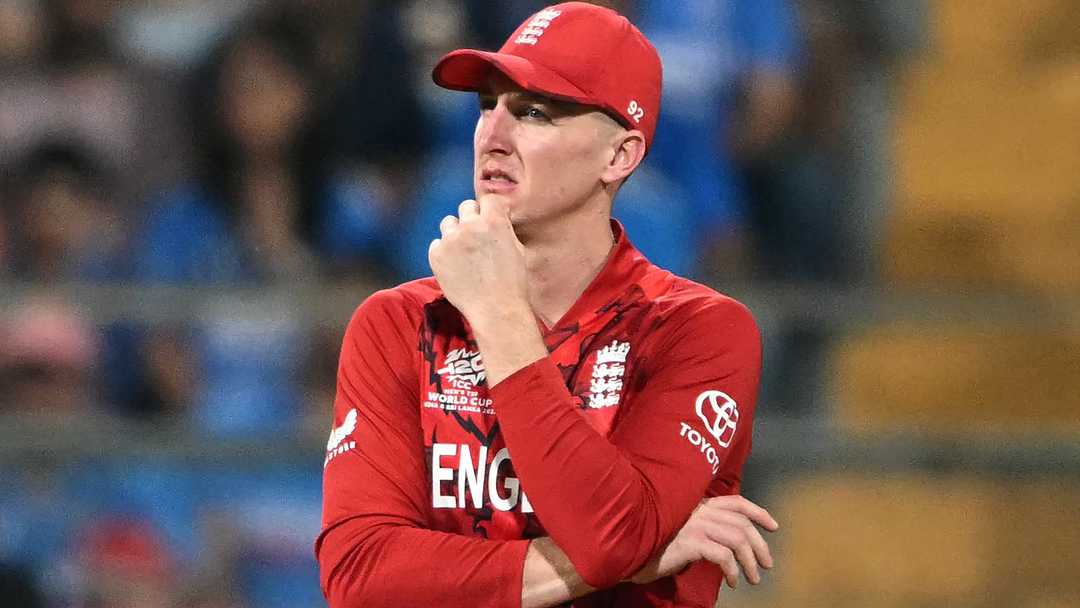
For captain Harry Brook, the tournament ended with disappointment but also pride in how consistently his side refused to concede early.
"Yeah, disappointed, but extremely proud," Brook said after the semifinal defeat. "Couldn't ask for much more as a captain. We've had an amazing campaign and I said we're never out of games—that's proven again tonight. We were in the game all the way until the last over."
That pattern appeared repeatedly. England's victories often required recovery acts rather than straightforward dominance. Their batting rebuilt after early wickets; bowlers produced spells that prevented opponents from breaking games open.
The campaign itself rarely followed a smooth path. Nepal pushed England far closer than expected. A defeat to West Indies briefly left qualification in doubt. Scotland and Italy forced uncomfortable moments before Brook's side secured passage into the Super 8s.
From there, the tournament steadied. A disciplined bowling performance against Sri Lanka and Brook's brilliance chasing Pakistan helped move England into the semifinals. Even the contest against New Zealand stretched into the final over, with Will Jacks again steering England across the line.
Jacks' contributions formed one of the most consistent threads. Whenever England drifted in a chase or searched for momentum, he produced interventions that kept the equation manageable. With the ball, his offspin often arrived at useful moments, breaking partnerships.
Alongside him, Jacob Bethell's influence grew steadily. The left-hander had begun establishing himself across formats, but the World Cup offered another glimpse of how quickly he was becoming one of England's most dangerous middle-order players. His ability to counterattack when an innings threatened to stall repeatedly gave England a route back into contests.
By the time England reached the semifinal, both players had shaped key moments. In the knockout, it was Bethell who again pulled England back into the contest.
The semifinal reflected both the strength and limitation of England's identity. India's batting forced England into difficult positions, and Brook admitted execution with the ball fell short on a surface offering little forgiveness.
"They just have batsmen coming out of everywhere," Brook said. "They're clean ball strikers. If you miss, you're going for six or four. We didn't execute as well as we could have tonight. That's cost us."
Small moments tilted the balance. One came when Brook spilled a chance from Sanju Samson, a moment he acknowledged could have changed the innings.
"Catchers win matches, don't they?" Brook said. "Unfortunately it didn't stay in my hands. He played a very good innings and arguably won them the game."
The missed opportunity stayed with him. "Yeah, obviously it's in the back of your mind. I kept looking at the scoreboard and he was piling the runs on. I was thinking I'm going to have to get 89 tonight. It's not ideal, but it's happened now."
If the dropped chance represented one imperfection, the chase illustrated the character they had shown throughout. Even as the required rate climbed and wickets fell, England kept forcing India to defend deep.
Bethell's counterattack briefly shifted the rhythm. His hundred turned a fading chase into a contest again, carrying England far closer than early overs suggested. It was another example of how England navigated the competition—relying on bursts of individual brilliance to reshape games moving away from them.
That stubbornness has become part of England's identity under Brendon McCullum. Brook pointed to the culture when reflecting on how often they fought back.
"They've fought their arses off and we've been in the game until the very last ball almost every game," he said. "We've got some extremely good players, some extremely tough characters to play the innings we have in this competition."
"I've said plenty of times he's the best coach I've ever had," Brook added of McCullum. "The way he speaks to everybody, his aura in the dressing room—everybody looks up to him. What he's done over the four years he's taken over has changed English cricket for hopefully the best."
Brook's own leadership follows a similarly instinctive style, shaped by constant communication with McCullum.
"I feel like I've done fairly well," Brook said. "I'm quite an instinct captain. I make decisions on the field, and we get a lot of messages from Baz off the field. Our partnership has been good throughout this competition."
In many ways, England's run to the semifinal captured the character of this side. They were rarely flawless. Their games often contained imperfections—an expensive over, a missed chance, a batting slump. Yet those imperfections rarely pushed them completely out of matches.
Across the tournament, England repeatedly showed the ability to stretch contests and remain competitive even when situations favoured the opposition. It carried them deep and made them difficult to put away.
Yet the fully rounded performance—where batting, bowling, and fielding aligned—never quite arrived.
Related Posts
 Jacob Bethell’s night at the Wankhede
 The Bumrah over that broke England