


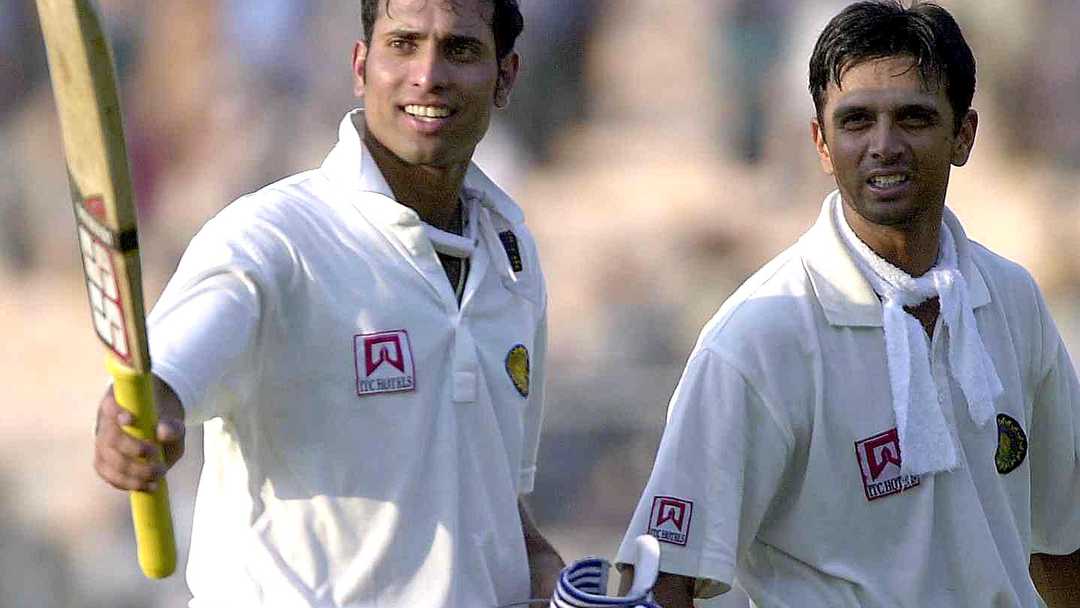
Eden Gardens 2001: Silver Jubilee of a Kolkata epic
India commemorates the Silver Jubilee of their famous Test win against Australia. VVS Laxman, the architect of that historic victory, looks back at what unfolded at the Eden Gardens in Kolkata 25 years ago.
How do you look back at the Test, 25 years on?
When I look back after 25 years, it still feels a little surreal. That Test was more than just a match; it became a powerful reminder of what belief and resilience can achieve. We were following on against arguably the best team in the world, led by Steve Waugh, and very few people gave us a chance. It feels less like an individual innings and more like a story of collective belief. It showed what can happen when a team refuses to give up. For me personally, that Test reinforced that if you stay present, keep believing and keep fighting, extraordinary comebacks are always possible.
What does it take to score 281 in such trying circumstances?
It takes patience, belief, and the willingness to stay committed to the moment. When I walked out to bat, the situation was extremely challenging, but I reminded myself not to think too far ahead. The focus was simply to fight through each ball, each spell, and each session. I never walked out thinking about scoring 281. The goal was to stay there, to compete, and to keep believing. Facing bowlers of the calibre of McGrath, Warne, Gillespie and Kasprowicz meant every run had to be earned. That innings taught me that when you refuse to give up, even the most difficult situations can transform into something extraordinary.
How much did it change the psyche of Indian cricket collectively and individually among the players?
It had a profound impact on the mindset of our team. Until then, teams like Australia often felt almost unbeatable once they gained momentum. That Test showed us that no situation in cricket is truly hopeless if you stay patient and keep competing. It built a deep sense of belief within the group. Coming back from a follow-on against a side of that quality left a lasting imprint. From that point onward, whenever we faced pressure, we had a powerful reference point.
Individually, it had a big impact. Players began to trust their ability to perform under pressure. It created a mindset where resilience, belief, and the willingness to fight became central to the identity of Indian cricket. That Test didn't just change the result of a series but it changed how we as Indian cricketers saw ourselves.
Such a marathon innings – where did the energy come from? Or was it due to pure fitness and resolve?
The atmosphere at Eden Gardens was incredible. When more than 90,000 people are behind you, every run feels special, and it gives you tremendous strength. A big part was also the motivation of doing something meaningful for your country. When you are representing India you feel a deep sense of responsibility.
In moments like that, fatigue almost takes a back seat because your focus is entirely on contributing to the team. Batting for long periods has always been about staying present. I tried not to think about how long the innings had become. It was simply about the next ball. Having someone like Rahul at the other end also helped enormously. We kept reminding each other to stay patient. When you approach it that way you slowly settle into a rhythm where the mind becomes very calm.
What is it about Australia that motivated you so much?
Australia at that time represented the ultimate challenge. They played with tremendous confidence and intensity. For a cricketer, that kind of opposition naturally motivates you to raise your own standards. But more than anything, it was about mindset. When you face bowlers like McGrath, Gillespie and Warne, you cannot walk out thinking about survival alone. You have to believe that you can match them. For me, it was about having that quiet aggression in your thoughts, the belief that if you stay mentally strong and disciplined, you can turn the pressure back on them.
When did you know that you would be batting at No 3?
It happened right at the end of our first innings. I had just walked into the dressing room when John Wright came up to me and said he wanted me to bat at No. 3 in the second innings. The idea was to send someone in early who could counter the Australian attack and try to shift the momentum. For me, it felt like an opportunity.
Batting at No. 3 has always been my favourite position because it allows you to influence the game early. In a challenging situation, I saw it as a chance to step up, embrace responsibility, and contribute in a way that could inspire the team.
How crucial was your 59 in the first innings?
Personally, the 59 I scored in the first innings was significant. Even though it wasn't a big score, it helped me find my rhythm against a very high-quality attack. That innings helped me understand the pace of the pitch and the rhythm of the bowlers.
Steve Waugh spread the field and wanted to keep me off strike. My focus was to manage the strike well. I tried to farm the strike as much as possible. In many ways, it gave me the confidence and clarity I carried into the second innings.
What was the approach on the fourth day?
Even at that stage, we knew the match was far from safe. Australia were still ahead, so Rahul and I focused on one clear objective: batting time. Rather than thinking about the scoreboard, we decided to break the day into phases, beginning with the first session where the aim was simply to get through without losing a wicket.
Tactically, we were clear. McGrath was probing outside off, Gillespie was hitting the deck hard, and Warne was looking to exploit the rough. Our approach was to minimise risk by leaving well, playing late, and capitalising only on the loose deliveries. We also felt that if we could keep them in the field long enough, the pressure would gradually shift. In Test cricket, time at the crease can change the momentum.
After 25 years, are there parts you remember vividly that the footage doesn't show?
Absolutely. The partnership with Rahul was not just about the runs we scored; it was about constantly supporting and motivating each other through long, demanding hours in the middle. There were physical challenges. I remember dealing with quite a bit of back pain, and Rahul was struggling with cramps. But we just kept encouraging each other to push through.
Even when we reached milestones, we were very careful not to get complacent. Our conversations were always about staying disciplined. Every time we met in the middle it was something simple: stay patient, keep batting. Another thing I remember vividly is the energy around us. The substitutes running drinks were incredibly encouraging.
What do you remember about the dressing-room atmosphere?
Early in the innings, the dressing room was understandably quiet and tense. We were still in a very difficult situation. But as the partnership began to grow, you could sense the mood slowly changing. The belief started building session by session. I was told later that Sourav Ganguly actually made everyone stay in the same seats where they had been sitting when the partnership started to flourish. He didn't want anyone to disturb the luck of the day. It sounds like a small thing, but moments like that show how invested the entire team was.
When did you realise India could win the Test?
Even though it was always going to be a tough ask, Australia still had tremendous depth in their batting. While Harbhajan Singh was building relentless pressure, the Australians were still finding ways to score. The moment when the belief really grew stronger was after Tea, when Sachin produced that magic spell and picked up three crucial wickets in quick succession. Those breakthroughs changed the rhythm of the game. Suddenly, Australia were under real pressure.
By then, the atmosphere at Eden Gardens had become electric. That was the phase when it began to sink in that something truly extraordinary was unfolding.
Related Posts
 Mexico vs Argentina,9th Match,ICC Men’s T20 2028 World Cup Americas Sub Regional Qualifier B, 2026,2026-03-14 14:30 GMT
 ‘I would have done things differently’: Agha on controversial run-out
 NSC to wait for inquiry committee’s report to decide BCB’s fate