


'People are seeing something in Indian coaches now' – Hemang Badani and a changing coaching order
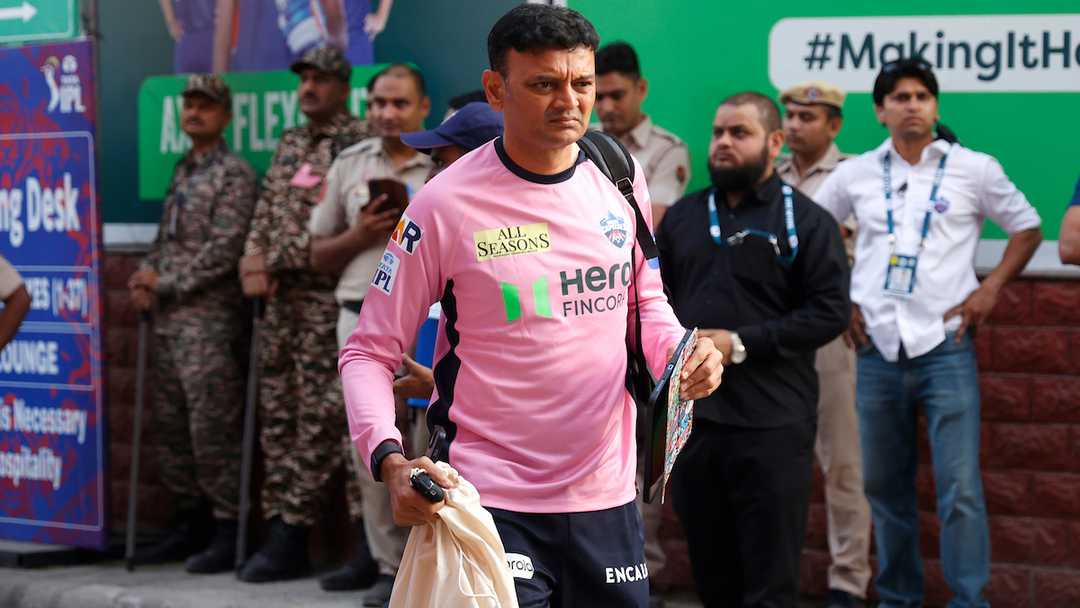
Of the ten head coaches in IPL 2026, three are Indian. Hemang Badani's CV is filled with trophies as head coach in the Tamil Nadu Premier League and the ILT20. He has been part of three title-winning campaigns in the Lanka Premier League as a batting consultant and served as batting coach for Sunrisers Eastern Cape during their SA20 win in 2023.
Set for his second season in charge of Delhi Capitals, Badani has a maiden gig with Southern Brave – now the Capitals' sister franchise – lined up at the Men's Hundred later this year. This marks a rare instance of an Indian head coach across three franchise competitions globally.
Indian coaches are gradually going global in different capacities, especially with a significant IPL influence across worldwide franchise competitions. Meanwhile, India has not had an overseas coach since the 2015 World Cup. Is this a new dawn for aspiring coaches from India?
In an exclusive conversation, Badani discussed being an Indian coach overseas, building player trust, and the future of the coaching landscape for Indian professionals.
Your coaching journey has been unique, with success overseas in the ILT20 before your first season with Delhi Capitals. Was this always the plan?
The roadmap was laid out earlier, starting with coaching in the TNPL. That helped me gradually climb the ladder. There's still an IPL trophy I'm desperate to win. TNPL was my starting point by chance.
Coaching isn't one-sided where you talk all the time. At age-group cricket, kids need guidance, but with professional players, it's important to understand where they are, what they're thinking, and how I can add value rather than imposing one method.
My strength is player management and providing clarity. I never thought I had the temperament to coach, but now I enjoy it and believe I do a decent job.
Does an Indian player find it more comfortable communicating with an Indian coach?
There are excellent coaches worldwide, but an Indian coach can reach out better, understanding the culture and pulse. Knowing a player's background from under-12 or under-15 days, through homework and connections to their state, makes communication easier and helps understand what works for them.
Is communication or cultural difference a barrier overseas?
It's about how you communicate, bring players to your side, and quickly understand their goals, strengths, weaknesses, and recent performances. How can I help them improve or maintain their form without unnecessary tinkering? Recognizing all that is key.
Is it challenging when a player's approach changes after a year apart?
A player of calibre might be under four or five different coaches in a year, each giving different role clarity. One coach might ask for more aggression, while I might want them to take the game deep. It depends on the team's structure and other players' skills.
Players rarely return doing the same thing. If I want the same role, I give a heads-up. If a new role suits them better, I might enable that. Players have onus on themselves; in most tournaments, with only about five practice days, you don't tinker with technique—you provide role clarity and ensure match readiness.
Why has it taken so long for franchises to consider more Indian coaches?
I think it's best to ask franchise owners. But there are enough good Indian coaches now. Initially, India lacked enough coaches and a structure for former players to become professional coaches. This has changed, with examples like Rahul Dravid and Gautam Gambhir winning a World Cup, Ashish Nehra winning an IPL and reaching a final, and Chandrakant Pandit winning a championship.
India had overseas coaches before, but recently, the board has consciously moved towards Indian coaches with good results. People are now seeing something in Indian coaches, recognizing we can do the job globally, on par with overseas coaches.
What does it mean for emerging Indian coaches in terms of skill set?
Be humble and recognize that cricket credentials have little to do with coaching. You can bring in experiences, but you're not the centre of attraction—just a complimentary accessory. Put aside your ego, don't think of yourself as a former national player, and work hard to help every player, treating them like your children.
Could an Indian coach lead England or Australia soon?
Sridharan Sriram has been part of the system quietly. If we've succeeded in environments without Indian coaches, the day isn't far when an Indian should coach an overseas side. It's a professional job, like Brendon McCullum coaching England or Daniel Vettori in Australia. It's a global market; if you're good, your origin doesn't matter. But you must deliver results.
What barrier must an Indian coach overcome overseas to implement ideas?
Avoid the superstar culture. Being a star player doesn't make you a star coach. The best coaches worldwide agree: your job is to complement players, be there for them, and act in their best interest with humility, like you would for your child.
What changes when coaching teams under the same franchise in different leagues?
Building trust between coach and player is foremost. Communication is key—I speak four or five languages, which helps in India and with overseas players. Clear, transparent communication breaks the ice in the first five to ten days, building player confidence—the basic crux of successful coaching.
What's the difference between coaching Axar Patel at Delhi Capitals and Tristan Stubbs in the SA20?
Not much. It's about building trust so the player respects and understands why you're giving information. Once confident in your inputs, they may not take everything but will listen and engage. If they ask, "Coach, why?" I know trust is built, allowing healthy conversations and comfort.
Do IPL franchises have an evolution plan for coaches?
I presume so. Franchises likely look at coaches gradually reaching the top job and taking multiple roles across leagues. If a coach does well, why not employ them in two or three places? It's seamless and eases management collaboration, so I see this happening.
What will the coaching landscape look like for Indian professionals in ten years?
We're here to stay. Many Indians will coach in overseas leagues successfully. The market is open; previously, there was a lean towards Australian, New Zealand, English, and South African coaches, but now Sri Lankans and Indians are coaching outside, with more Asian influx. I was approached by national teams for World Cup consultation but declined due to commitments. This shows there's a place for Indian coaches.
Related Posts
 The ‘dumb duck’ trap behind CSK’s unravelling
 Deja vu? Fakhar Zaman’s PSL charge echoes Dallas incident