


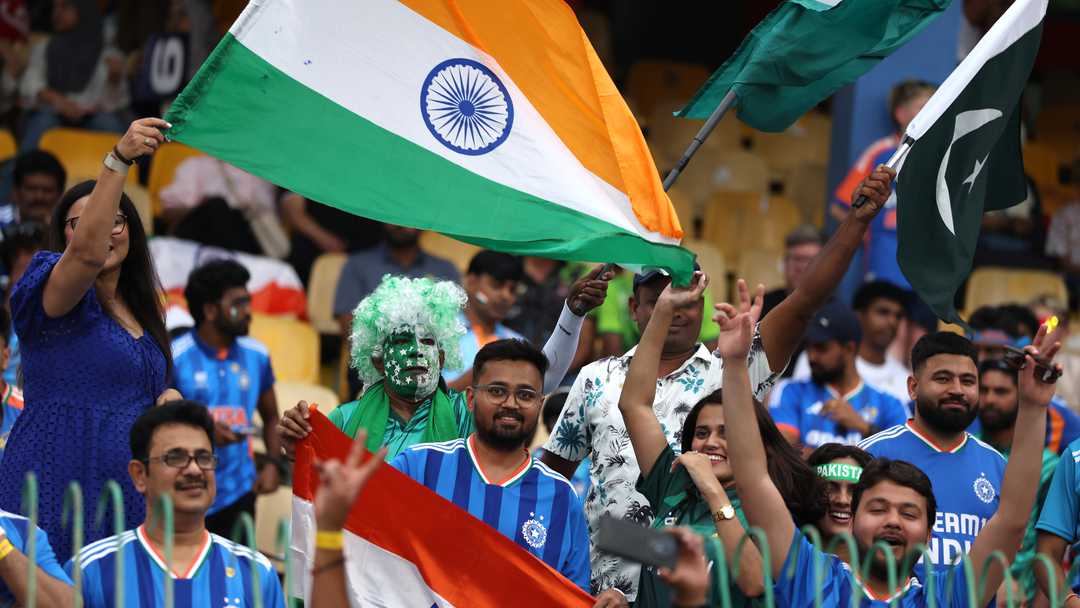
Is the India-Pakistan rivalry worthy of being called great?
Being a neutral in India before, during, and after their men’s World Cup match against Pakistan evokes empathy with figures like Hiroo Onoda, a Japanese soldier who remained in hiding long after World War II ended, unaware the conflict was over.
This piece—a neutral observer caught in the maelstrom of cricket’s grandest occasion—was proposed hours before the first ball in Colombo. An editor suggested waiting a couple of days, to avoid being lost in the match-day coverage.
Now, two days after Sunday’s mega match, it feels safe to exhale. Given the extreme hype, you might have expected nuclear codes to be exchanged in the dugouts. That’s an unfortunately apt analogy: Pakistan and India have often been at war or on the brink, most recently in May last year, with tensions still taut. Much of the pre-match marketing leaned into military metaphors—clumsy and reckless when real-world conflicts loom. Sport and politics can’t be separated, but war and sport should never meet.
The non-military hype was weak. An Indian TV ad showed a Pakistan fan warning against belittling cricket’s “greatest rivalry,” met with scoffing references to India’s 7–1 tournament record over Pakistan. A Pakistan TV spot featured a taxi driver joking about a forgotten handshake, implying Australian passengers had been influenced by India.
With vast sums at stake—revenue estimates for a single ICC tournament India-Pakistan match reach USD 250 million—even the best minds run dry, resorting to unfunny YouTubers and cabbie jokes. When Pakistan initially refused to play Sunday’s game (in solidarity with Bangladesh’s security concerns), cricket’s administrators, eyes fixed on the bottom line, took notice.
“There was even a pre-match show, which tells you Pakistan versus India means a lot,” said Albie Morkel, a consultant with South Africa’s team. He referred to rapper Hanumankind’s performance, which itself carried political weight—his song is from a film banned in Pakistan for its perceived anti-Pakistan narrative.
Morkel noted the added pressure: “These teams really want to get one over each other. The pressure is massive; more than in a normal World Cup game.”
Lalchand Rajput, who coached India to their 2007 World T20 win over Pakistan, called it “just like Ashes in Asian countries,” adding that “India played fantastic cricket in all departments.”
Despite the modern game’s commercial focus, it isn’t all about money—it’s also about cricket. That seems an odd point to make, given the warmongers, nationalists, and capitalists determined to bend the sport to their will.
If the hype was a balloon, the match was the pin that popped it. As a contest, it was flaccid. Ishan Kishan’s 77 off 40 balls powered India to 175/7, enough to win by 61 runs. Rivalry? What rivalry?
In a Delhi restaurant in Connaught Place, where the match was projected on big screens, most people didn’t bother watching. Some older men kept an eye on proceedings, but a large table celebrating a 25th birthday was indifferent. Pakistan versus India? Meh. Who cares when there’s cake to eat.
So, yes, fellow neutrals, it is safe to come out now. The world is still here. Not much has changed. What was the fuss about? Perhaps nothing more than fuss itself—and money. Cricket? Not so much.
Related Posts
 Portugal vs France,4th Match,Portugal T20I Tri-Series, 2026,2026-04-06 14:00 GMT
Portugal vs Norway,3rd Match,Portugal T20I Tri-Series, 2026,2026-04-06 10:00 GMT
Multan Sultans vs Rawalpindiz,14th Match,Pakistan Super League 2026,2026-04-06 15:00 GMT
Portugal vs France,4th Match,Portugal T20I Tri-Series, 2026,2026-04-06 14:00 GMT
Portugal vs Norway,3rd Match,Portugal T20I Tri-Series, 2026,2026-04-06 10:00 GMT
Multan Sultans vs Rawalpindiz,14th Match,Pakistan Super League 2026,2026-04-06 15:00 GMT