


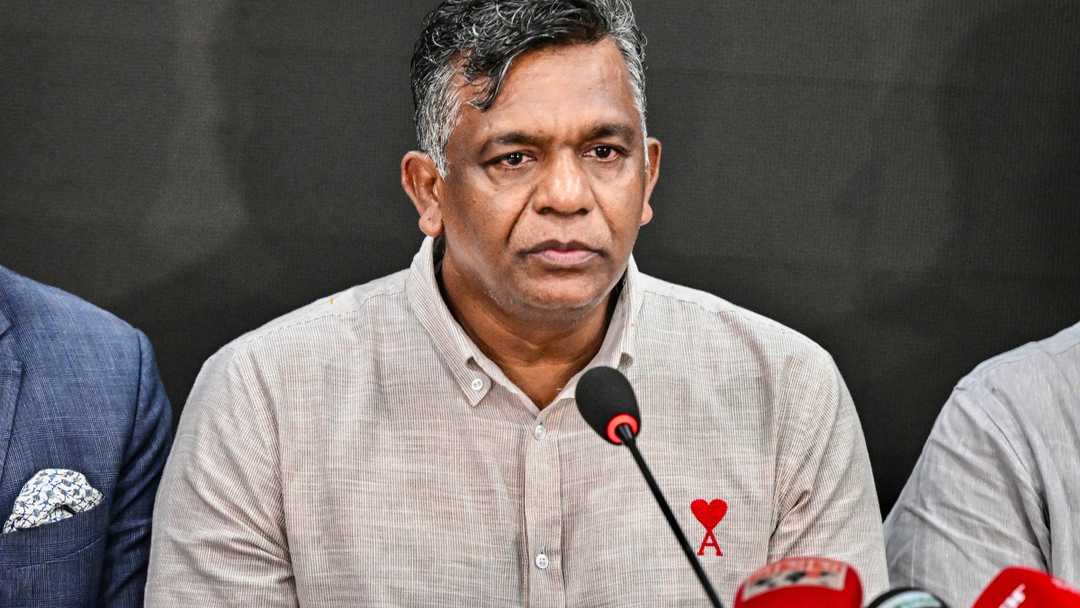
Aminul Islam's unilateral decision making draws scrutiny at BCB
Aminul Islam's unilateral decision making is drawing increasing scrutiny within the Bangladesh Cricket Board. His latest move—writing to the sports ministry after it formed an investigation committee to probe irregularities in the last BCB election—has deepened the unease.
The decision, taken without consulting fellow board directors, left several of them stunned. For some, it was consistent with how decisions have been made since Aminul took charge after winning the last BCB election.
Multiple board directors admitted they remain largely unaware of how key decisions are being taken.
One director said on condition of anonymity:
"I think we've had two discussions so far (apart from board meetings). One was when we decided not to play the ICC T20 World Cup, and another when we decided to give BDT two crores to Dhaka University. In both instances, it was more like informing us rather than taking our suggestion."
He added:
"In the first instance we were told the government does not want us to play the World Cup and so we are not going. In the second instance we were informed that we have decided to give BDT two crores to Dhaka University. So, I am not sure why there is such hue and cry for not being informed about the media release directed towards the sports ministry—this is not the first time such a thing has happened without our knowledge."
Seven directors—Nazmul Abedin, Mokhlesur Rahman Shamim, Rubabudowla, Abdur Razzak, Rahat Shams, Hasanuzzaman and Ahsan Iqbal Chowdhury—reportedly responded with a "thumbs up" when Aminul shared the press release in the directors' group. The release was prepared in Australia, where he is currently spending time with his family.
The only written response in the group came from Asif Akbar, who wrote: "Thanks chief, it was needed."
Another board member admitted uncertainty over how to react, particularly given the potential ramifications of making the letter public.
He said:
"We are not sure why he did this and who is guiding him about the letter to NSC and making it public, because we could have handled it differently. NSC is our guardian and it is not right to write a letter in this language to our parents—all the grounds we use are property of NSC. The government formed an investigation committee and they can do that. Forming a committee does not imply we are proven guilty. I think this letter has created distance with the government."
While Aminul urged the sports ministry to disband the committee, the National Sports Council (NSC) has already initiated the process. Its committee chief received formal communication from the government on March 16 to begin the probe.
NSC official Doulotuzzaman Khan confirmed the move is within the body's constitutional framework.
He stated:
"According to Section 24 of our National Sports Council Act, the government can give instructions to the NSC on any matter as necessary. Since BCB is an affiliate, a schedule-enlisted organisation of the NSC, if any irregularity comes to the government's attention, the government has the authority to investigate and give instructions."
He added:
"If they think there is no problem, then there's no problem with the investigation. It's being done by outsiders—a neutral former judge and experienced people. I don't think it's a problem. After the investigation, when it goes to action, then there is a matter of law and order."
Any engagement with the ICC would depend on the findings of the probe.
"That's for much later. It will depend on the extent of the irregularities found by the independent investigation committee. Then it will be considered whether we need to sit with ICC or not, and the procedure for taking action will be considered," he said.
Aminul's tenure appears to be entering a turbulent phase. He is facing a growing disconnect within the board and among sections of the cricketing community. Administrative challenges—including the inability to conduct regular domestic leagues due to resistance from opposing factions—are adding to the strain. By taking on the government in this manner, he may have further complicated his position. If his four-year tenure is cut short, much of the responsibility may rest on his own unilateral leadership approach.
Related Posts
 West Indies Women vs Australia Women,1st T20I,Australia Women tour of West Indies, 2026,2026-03-19 22:30 GMT
 John Mooney appointed Delhi Capitals’ fielding coach