


A toss decision built on numbers, undone by conditions
Ajinkya Rahane's decision at the toss felt like one of those calls that lives in the space between instinct and data. Ahmedabad has, over time, nudged captains towards batting first—eight of the last ten IPL games here had gone that way—but those numbers come with a condition often left unsaid. The venue has not been forgiving to middling totals. If you bat first, you have to go big. Anything under 190 has tended to dissolve under pressure, and even par has hovered north of 210.
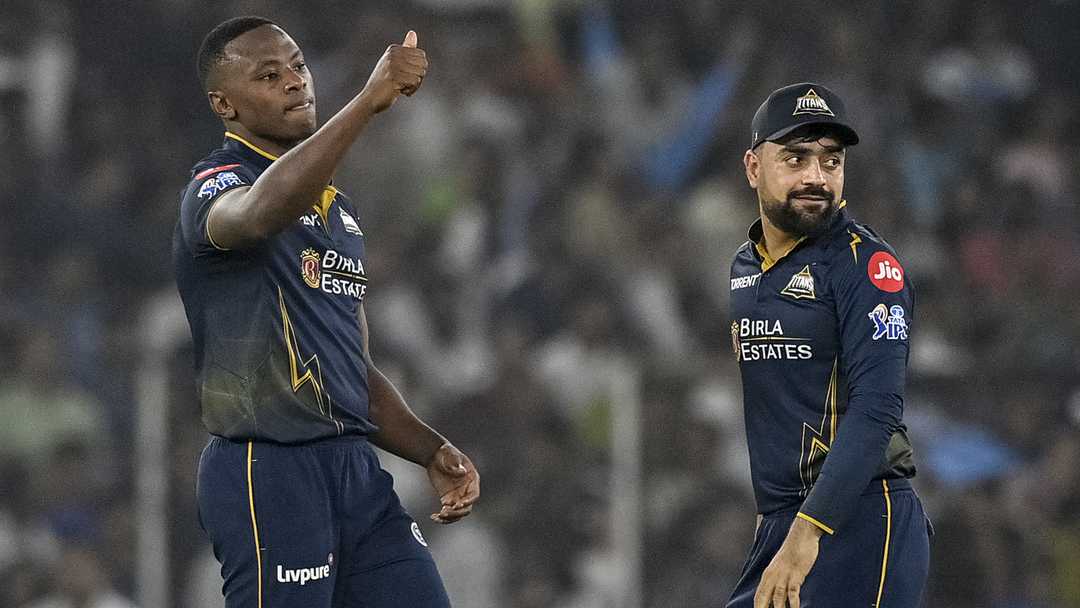
The matchup seemed to justify that gamble. Gujarat Titans had been unusually blunt with the new ball: just three wickets in four matches, and an average of 81.33 in the phase. Mohammed Siraj, their senior quick, had only one Powerplay wicket in his last eight innings. Kagiso Rabada, his partner, had similar lean returns at this venue.
But pitches, like games, have a way of resisting narratives built elsewhere. Pitch #6, a red-and-black soil mix, offered just enough seam movement to make orthodoxy valuable again. Siraj found swing by pitching the ball up, and Rahane, perhaps pre-committed to the tempo he needed to set, walked across and miscued a slog to mid-on. If ever Rahane's longer format skills were on demand, it was on this wicket against this new ball pair.
Rabada followed a similar template. A length ball that straightened just enough took the edge of Angkrish Raghuvanshi's bat. Then came the dismissal of Tim Seifert: a wide, back-of-a-length ball that deviated ever so slightly, catching the toe-end rather than the middle. Three wickets, each slightly different in method, but unified by discipline.
For the first time this season, a new-ball pair ran unchanged through the Powerplay, and the decision was rewarded with control as much as wickets. Siraj and Rabada induced false shots at a rate of 48.6%—the highest in this phase this season. The method was unmistakably red-ball in origin: almost everything outside off stump, on a good length or shorter.
At 37 for 3, the toss decision had already lost most of its edge.
Cameron Green's innings pushed KKR to 180, which kept them in the game but didn't quite align with the original premise of batting first. To defend that total, they needed early access to Gujarat's middle order, which has looked less certain than their top three.
Three overs of spin in the Powerplay went for 39 runs, a defensive option that neither contained nor threatened. The seamers, when they came on, erred in the opposite direction to their counterparts. Where Siraj and Rabada had held their lengths and attacked the corridor, KKR's quicks pitched up too often and went straighter, feeding into hitting arcs. By the time Gujarat reached 71 for 1, the game had moved beyond tactical maneuvering into inevitability.
There are, however, broader signs for Gujarat that extend beyond this result. Prasidh Krishna has carried forward the methods that served him well last season and Rashid Khan's return to rhythm has restored balance to that phase. If Siraj and Rabada can replicate even parts of this new-ball performance, Titans begin to look like a more complete bowling unit—one that can shape games at the onset.
Related Posts
 Hardik Pandya out of Australia A series with fresh injury
 Washout eliminates Japan; Nepal, Afghanistan qualify from Group A
 Rizwan’s curious case: Midnight summons, confiscated phone, and a probe shrouded in questions