


The merit of winning big in a game of fine margins
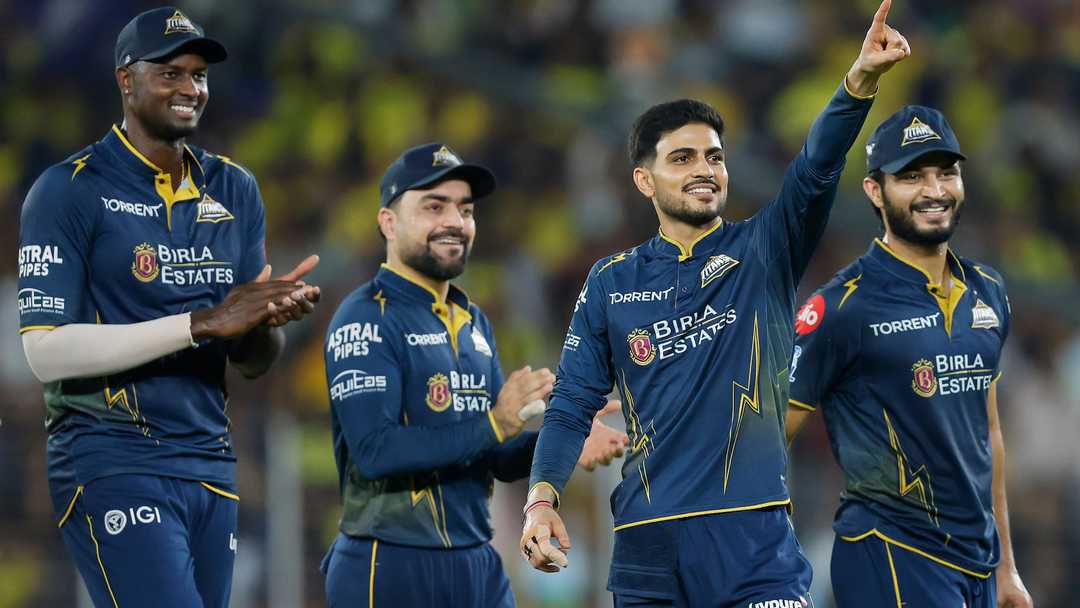
"Cricket is a funny game" goes the cliche. It can get funnier, almost bizarre, when the calculators enter the field. It's that phase IPL 2026 finds itself in, with multiple teams still fighting for the final playoffs spot. How could table-toppers RCB, miles ahead on NRR despite GT's massive win on Thursday, possibly miss out on a top-two finish? Believe it or not, GT were confirmed for a Qualifier 1 berth before anyone else, but there existed a mathematical chance of both RCB and SRH surpassing them.
"Mathematical" and "wildest" are the keywords. For that to happen, here's a preposterous scenario bordering on absurdity. SRH needed to score 712 batting first. So Travishek to score 348 apiece, with Ishan Kishan and Heinrich Klaasen carrying it forward. Then SRH to "limit" RCB to 604. If it went as per this script, the NRRs would read: SRH: +0.697, RCB: +0.696 and GT: +0.695.
Mania aside. SRH managed as much as they could realistically, registering their sixth 250-plus score in the IPL. No other team bar India (7) has more than three in Men's T20 cricket history. They needed to limit RCB to 165 or lower to sneak into the top two. Had RCB finished with 166, the NRR for both teams would have been +0.649 (rounded off), and RCB would have inched ahead on the third decimal point.
Neither happened on Friday, and the three teams are positioned on the points table exactly as they were before the game started. SRH would seek inspiration from the fact that their only title win came when they finished outside of the top two. But that remains the only such instance across 15 editions since the inception of the current playoffs format.
The tournament opener between these two sides is worth revisiting. RCB gunned down 202 in 15.4 overs – the least taken to complete a 200-plus chase in all IPL. Had RCB taken exactly 19 overs to finish that chase, and considering every other result panned out as it did, SRH would have needed to win by 56 runs after scoring 255 in their last league fixture. They won by 55!
Add the fact that SRH were blown away by GT by an 82-run margin 10 days earlier. SRH's NRR dropped by -0.406 in Ahmedabad, while GT took giant strides in their final two home fixtures. RCB's NRR romped by a massive +0.818 following their rout of DC. As it stands, Axar Patel's team still stand a mathematical chance of making it to the playoffs if PBKS and KKR finish at 13. However, in a possible case of MI beating RR and them winning against KKR on Sunday, the combined margin of the two results needs to be roughly around 230 runs.
KKR, meanwhile, have taken giant strides in the second half following a winless run in first six games. The turnaround started with two close wins, the second in Lucknow pushed into a Super Over. Finn Allen's blistering hundred against DC saw their NRR spike by +0.370, but KKR would've been better off had they also seized advantage in their previous outing in Hyderabad. Against MI, they needed 36 off the final seven overs, and dragged the game until 18.5, playing out 20 dots in the final 35 balls of their chase.
That leaves a possibility of KKR missing out on NRR in case of a 15-points tie between them and PBKS. PBKS hold an advantage currently: +0.227 versus +0.011. If they beat LSG by 10 runs on Saturday, they will finish with an NRR of +0.246. For KKR to topple that, they would need to beat DC by 61 runs or with 37 balls remaining (assuming a first-innings score of 200 in either case). Had they taken two overs lesser combined in aforementioned run-chases, the margin required would've been 42 runs or 25 balls remaining.
The NRR and the mid-table muddle has been the recurring theme in the IPL over the years. The 2024 edition threw up an unparalleled example. RCB's victorious 2025 campaign was preceded by their stunning turnaround in their run to the playoffs in 2024. They had lost six of their first seven games, and then won six on the bounce, capped off by a last over thriller against CSK at home.
In response to SRH's 287/3 earlier in the season, Dinesh Karthik's 83(35) helped them get to 262/7. Against GT in Ahmedabad, they gunned down 201 in 16 overs, Will Jacks racing from 37* off 26 to 100* off 41. Within a week's span, they completed a 148-run chase against the same opponent in 13.4 overs at home. The win margin in their next two games was 60 and 47 runs respectively.
Had RCB scored exactly 200 against SRH and completed the Ahmedabad chase in 18 overs, they would've needed a 60-run win over CSK after scoring 218. 60 runs was CSK's highest defeat margin until GT bettered that (89 runs) on Thursday.
The 19 years of IPL have thrown up numerous such NRR scenarios, perhaps none better than the 2014 edition. Best remembered for MI's dramatic win over RR at Wankhede, it's worth noting that KKR (+0.418) and CSK (+0.385) were separated by a thin margin at No.2 and 3. Both played their last league game on the penultimate double-header day; KKR needed to chase 161 within 15.2 overs against SRH, and they did it in 14.2, courtesy of Yusuf Pathan's 72(22).
The fine margins have played their part in qualifications and the eventual results historically. It always presents a strong case for teams to try and grab it by the scruff of the neck, or hang in there for as long as possible – depending which way the match result, if inevitable, is headed to.
Related Posts
 Trichy Grand Cholas vs Vida Kovai Kings,Qualifier 2,Tamil Nadu Premier League 2026,2026-08-26 15:00 GMT
Rotterdam Dockers vs Amsterdam Flames,1st Match,European T20 Premier League 2026,2026-08-26 14:15 GMT
Central Delhi Kings vs South Delhi Superstarz,Qualifier 1 (1v2),Delhi Premier League 2026,2026-08-26 09:00 GMT
Trichy Grand Cholas vs Vida Kovai Kings,Qualifier 2,Tamil Nadu Premier League 2026,2026-08-26 15:00 GMT
Rotterdam Dockers vs Amsterdam Flames,1st Match,European T20 Premier League 2026,2026-08-26 14:15 GMT
Central Delhi Kings vs South Delhi Superstarz,Qualifier 1 (1v2),Delhi Premier League 2026,2026-08-26 09:00 GMT