


Gambhir's balancing act with a team in transition
Nearly two years into Gautam Gambhir's tenure, Indian cricket presents an interesting contrast. In white-ball cricket, the results have been emphatic. India have won the Asia Cup, the Champions Trophy and the T20 World Cup under his watch. In Tests, however, the picture has been considerably more complicated.
After beginning with a 2-0 sweep of Bangladesh at home, India endured a 3-0 whitewash against New Zealand, suffered a 1-3 series defeat in Australia, fought to a 2-2 draw in England, beat West Indies 2-0 at home and then lost 2-0 to South Africa. Somewhere in that period came the retirements of Rohit Sharma, Virat Kohli, Cheteshwar Pujara and R Ashwin, forcing the side into its most significant red-ball reset in over a decade.
The Afghanistan fixture carries no World Test Championship points. Yet it arrives with India already chasing ground in a cycle they hope will end with a return to the WTC final. More importantly, it arrives at a time when India are trying to answer a difficult question: can a team still learning on the job remain good enough to challenge for the biggest prize in Test cricket?
Gambhir's answer is unequivocal. "The actual transition happened after England. It's been only nine Test matches. We were brilliant in England. We won against West Indies. You have two Test matches against South Africa, it hurts. But that is what it's going to be with transition. The consistency will miss because these are young boys. Most of the guys have played less than 30 Test matches, which is still not a lot of experience.
"So for me, I don't look at excuses. We haven't got the full-strength team, but we've got enough talent to turn it around. I'm very hopeful that we will give ourselves the best chance to win the World Test Championship."
The management appears to be judging the team through a different lens. Their argument is that the transition is younger than it appears. The retirements of big names altered the shape of the Test side. Shubman Gill inherited the captaincy in England, younger players were thrust into larger roles, and India suddenly found themselves trying to replace not just runs and wickets but also hundreds of Tests worth of experience.
The challenge is that WTC campaigns don't wait for rebuilding projects. The current cycle is already a year old and India find themselves sixth on the table, below Bangladesh. Yet Gambhir doesn't view the standings as a cause for concern. "Very optimistic," he said about India's chances of making the WTC final. "Till you have the opportunity to qualify, you are always optimistic. We know the kind of quality and talent we have. Yes, we can have one odd bad series here and there. But we know how much hunger we have in the dressing room."
The management's belief is that India's next successful Test side cannot be built through constant changes. Players need time. Young cricketers need to be trusted through failures. Continuity is viewed as the quickest route to long-term stability. The risk is that patience can be difficult to sustain when results fluctuate.
India's recent record demonstrates as much. Since the Bangladesh series, victories have not come as frequently. Yet Gambhir's argument is that judging the transition solely through wins and losses ignores the realities of where the team currently stands. That explains why he was unwilling to treat the Afghanistan Test as anything less than significant.
"Every Test match is important because we are going through a transition," Gambhir said. "There are a lot of young players in that dressing room and they should value every Test match. Very few people play Test cricket and it is a great honour when you represent Indian cricket. So I believe every Test match is as important as playing against Sri Lanka, Australia and New Zealand."
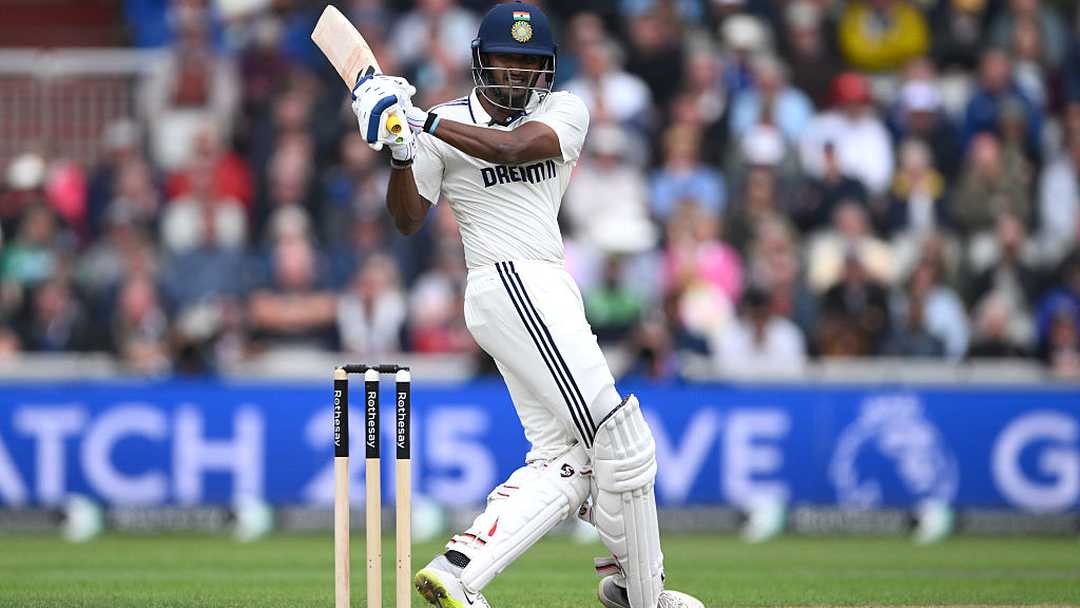
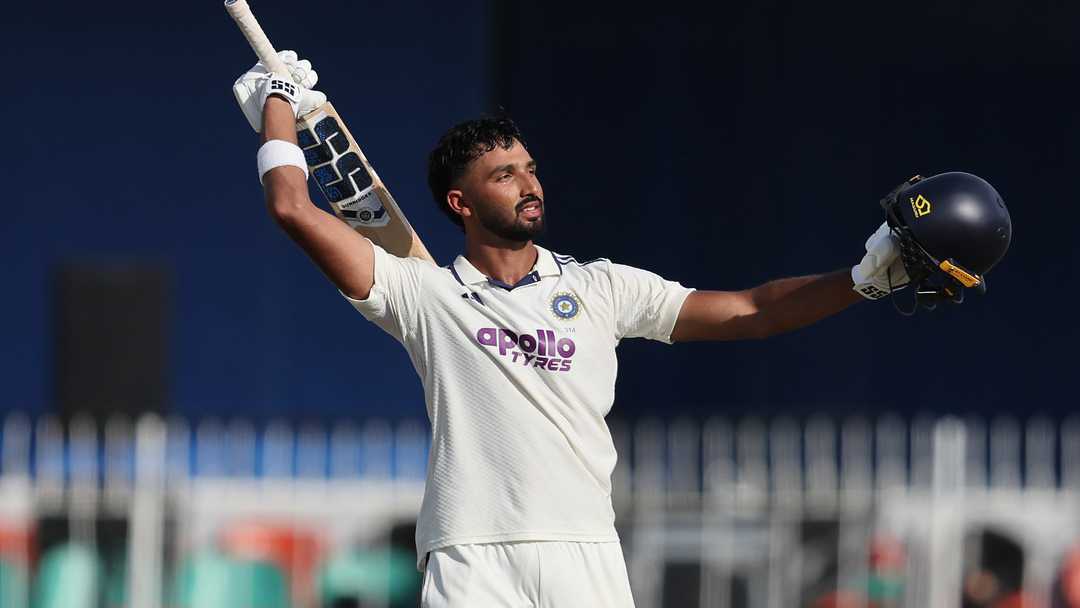
The balancing act between development and results explains some of the selection decisions. One major talking point has been the competition for the No. 3 position. Devdutt Padikkal has produced runs consistently in domestic cricket and arrives after another productive IPL campaign. Yet Gambhir made it clear that the management remains committed to backing Sai Sudharsan despite a modest start to his Test career.
"Honestly, he hasn't got a fair chance," Gambhir said. "He has only played a handful of Test matches. He started his Test career in England, which is not the easiest place. He has had a phenomenal run in IPL as well and we have to give him a fair chance. You can only pick 11, unfortunately. Sometimes you just have to wait for your opportunity. If judging players by only four or five Test matches is good enough, then we will never be able to build something. So hopefully he will get his time. Whenever his time comes, we will give him a fair run as well."
Gambhir's argument is that India's transition remains younger than many perceive. The WTC table, however, operates on a different timeline. India's challenge now is not merely to build a new Test side after the departures of Kohli, Pujara, Rohit and Ashwin, but to do so while remaining in contention for a place in the final.
Related Posts
 China Women vs Indonesia Women,Final,China Women T20I Tri-Series, 2026,2026-08-24 10:30 GMT
 Duleep Trophy: Kotian, Deshpande bowl North Zone out for 251
 Padikkal hundred headlines India’s mixed day in Colombo