


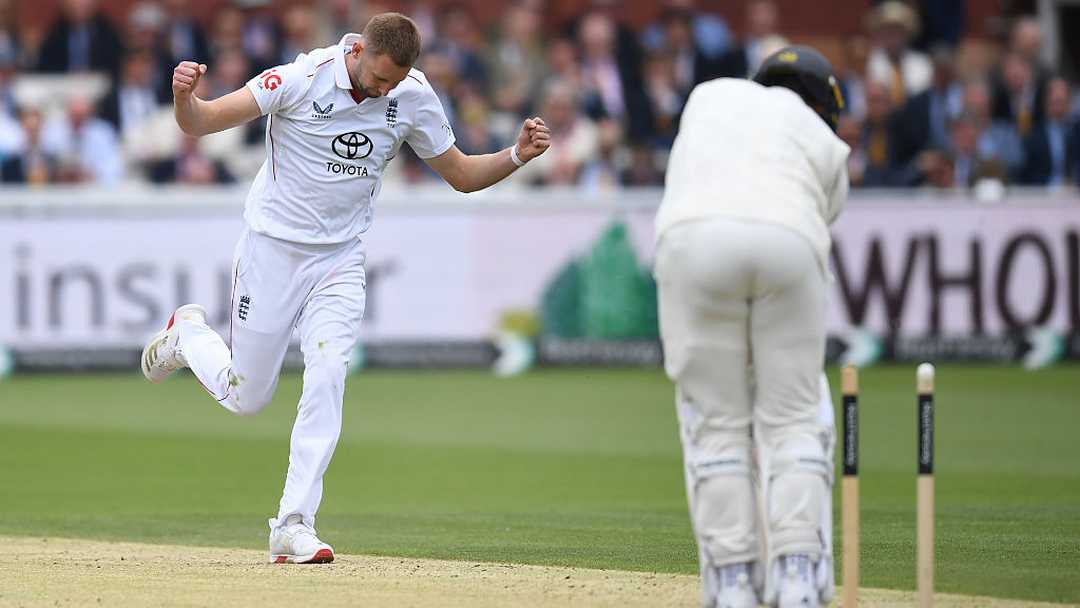
MCC vows swift action after problematic Lord's surface
The MCC has acknowledged that the Lord's pitch for the opening Test against New Zealand showed "more variable bounce" than it would have liked, following the second-shortest men's Test in the venue's history.
Just 167 overs were required across four innings as England wrapped up victory on the fourth day, with rain interruptions effectively extending a contest that might otherwise have concluded much earlier. Only two half-centuries were recorded across the match, underlining the challenges posed by the surface.
MCC chief executive Rob Lawson said the club was "naturally frustrated" by how the pitch played and recognized the "need to act quickly" to restore the surface.
"We recognise that the pitch for this Test has shown more variable bounce than we would have wanted. We hold ourselves to the highest standards and are naturally frustrated when a surface falls short of those expectations," Lawson said.
He noted that unusually hot and dry weather during May, followed by wetter conditions in the lead-up to the match, presented challenges in preparing the pitch.
"We fully recognise the need to act quickly. We will remain fully focused on applying all aspects of pitch development and improvement as outlined in our recently published MCC Cricket Strategy 2026-29."
The pitch came under scrutiny from the opening day, when 16 wickets fell, with another 17 tumbling on Day 2. CricViz rated it among the most inconsistent Test surfaces at Lord's since records began in 2006. These concerns arose despite the MCC's efforts in recent years to improve pitch quality, including using steam to sterilise sections of the square last winter.
England head coach Brendon McCullum admitted conditions heavily favoured the bowlers but praised his batters' ability to adapt.
"We need to be quite malleable, depending on the surfaces we get. Nothing needs to be so binary to play one certain way. We need to be able to adapt and adjust when required," McCullum said.
"The issue on that pitch was going to be the full and straight balls. Defensively, we talked about straightening up your defensive clock to respect the ball straight. But anything with width, we were trying to throw our hands at it, knowing it was going to be a low-scoring game."
McCullum highlighted the "bravery" shown by players in adjusting guard positions, crease movements and set-ups on a treacherous surface.
"I mean brave as in, how are we able to manipulate our guard or change where we stand on the crease? Do we come out of the crease, back in the crease? Do you stand on leg stump, off stump? Just to try and give the bowler something different to look at. The communication was the best we've seen for a while."
The Lord's square faces a busy summer ahead, hosting four Women's T20 World Cup matches including the final, a one-off Test between England Women and India Women, an India men's ODI and a Test against Pakistan, in addition to The Hundred and domestic fixtures.
Related Posts
 Deshpande, Kamboj wreak havoc to hand India A 1-0 lead
 CWI slashes international player fees by 25% in sweeping overhaul
 How moving down helped Shai Hope move forward