


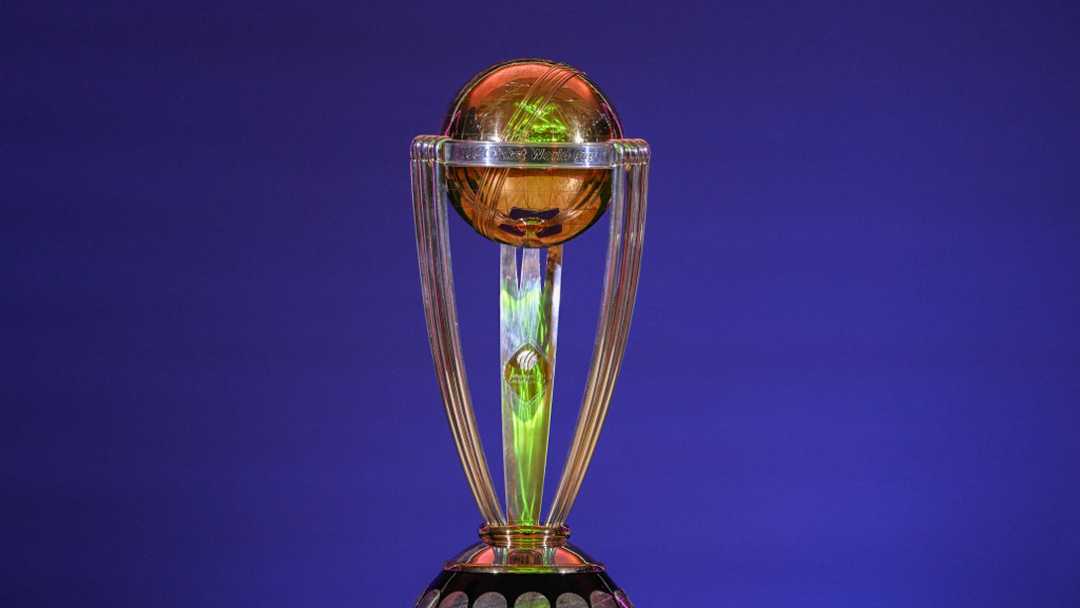
ICC unveils new formats for Men's ODI and T20 World Cups
The ICC has revamped the formats of its marquee men's events – the ODI World Cup and the T20 World Cup – adding more rounds to both competitions.
Following its annual meetings in Edinburgh, the ICC announced the format changes with the purpose of "creating more meaningful contests, elevating competitive standards, strengthening the competitive structure of both events, and enhancing the tournament experience for athletes and fans".
Men's ODI World Cup – what's changed?
The Men's ODI World Cup will now feature four rounds, with the addition of a round-robin Super Series round that will precede Round 2.
A total of 14 teams will participate: the last two editions (2019, 2023) featured ten teams, with 14 teams last featuring in the 2015 edition.
Round 1 will be played between teams 12, 13 and 14.
The top team will progress to Round 2, along with the other 11.
Round 2 will feature two groups of six, with the top three teams from each group and the next highest-placed team (one across both groups) qualifying for a round-robin Super 7.
Instead of Super 6 in the previous format, the Super 7 will now serve as the conduit for teams to qualify for the semi-finals. The top four teams will qualify for the semis, scheduled as follows: Teams 1 vs 4 and 2 vs 3.
Men's T20 World Cup – what's changed?
One of the big changes is the increase in the number of teams from 8 to 10 in the second stage. This could see more emerging teams making it through.
Twenty teams will be put in five groups of four each, rather than four groups of five. Two teams from each group will progress.
The Super 8 will be replaced by a Super 10, with two groups of five each.
After the top team from each group directly qualifies for the semi-finals, two IPL-like Eliminator matches will be played between teams placed second versus teams placed third in the opposite group.
Following the two Eliminator matches, the two semi-finals will be held, followed by the final.
Men's T20 World Cup 2028 – updates to qualification structure
Scotland, who replaced Bangladesh at the final hour in the 2026 edition, will gain direct entry into the Europe Regional Final.
The rest of the teams from 2026 that did not secure automatic qualification for 2028 will go through the Global Qualifier. The remaining eight spots in the Global Qualifier will be filled through regional qualification in Africa, Asia, Europe, Americas and East Asia-Pacific.
The highest-placed team from each region, as well as the next highest-placed three teams, will qualify for the 2028 T20 World Cup, adding to the 12 directly qualified teams – making a total of 20.
Note: The changes have been endorsed by the ICC after being recommended by the Development and Chief Executives' Committee but will only be finally approved after a review by the ICC's Finance & Commercial Affairs Committee in November this year.
Related Posts
 India A Women vs Australia A Women, 3rd unofficial ODI, Australia A Women tour of India 2026
Afghanistan vs Nepal, 4th Match, Group A, Asian Games 2026
Victoria vs New South Wales, 6th Match, Australia Domestic One-Day Cup 2026-27
India A Women vs Australia A Women, 3rd unofficial ODI, Australia A Women tour of India 2026
Afghanistan vs Nepal, 4th Match, Group A, Asian Games 2026
Victoria vs New South Wales, 6th Match, Australia Domestic One-Day Cup 2026-27