


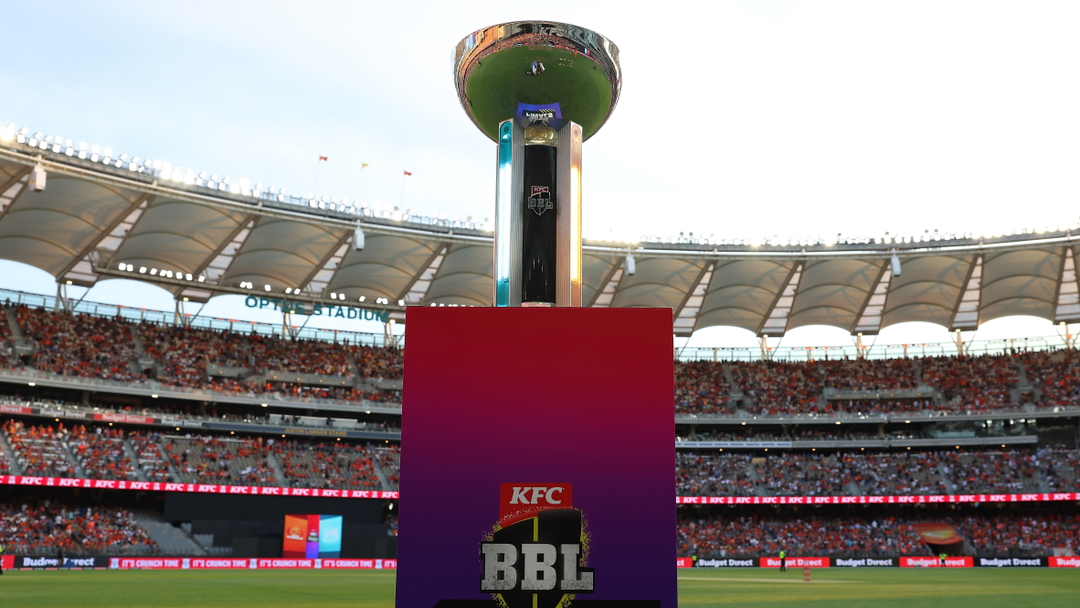
IPL Owners Eye BBL Teams, But CA Faces a Tough Sell
Expressions of Interest
Cricket Australia (CA) has confirmed expressions of interest from IPL owners and other Indian investors regarding the BBL privatisation. While CA has not named specific bidders, "usual suspects" in the IPL ecosystem are believed to be considering the opportunity. None have publicly confirmed their interest.
Project Management & Valuation
- Advisor: The Raine Group (US-based merchant bank) is overseeing the project. They previously managed the sale of The Hundred franchises in England.
- Valuation: Raine Group CEO Todd Greenberg has described the BBL privatisation as a "billion-dollar opportunity."
Key Obstacles for IPL Buyers
-
Ownership Structure & Control
- Melbourne Renegades: Currently the only team available for 100% acquisition. The sale is overseen by CA (not Cricket Victoria) and expected to close by Christmas. However, buyers would be building a brand-new team without an existing fan base.
- Other Teams: Hobart Hurricanes and Perth Scorchers are reportedly next in line. However, future sales are limited to a 49% stake.
- CA’s Stance: CA Chairman Mike Baird stated that CA and its members will retain control over critical operations, including:
- International scheduling
- Player availability
- BBL salary caps
- Branding proposals
- Reserve price for operating licences
- Approval of investors
- Comparison: This contrasts sharply with SA20, ILT20, CPL, and MLC, where IPL teams hold full ownership. In The Hundred, stakes vary (e.g., SRH owns 100% of Sunrisers Leeds; RPSG owns 70% of Manchester Super Giants; Reliance and GMR own 49% of MI London and Southern Brave respectively but exercise operational control).
-
Internal CA Disputes
- Cricket NSW is reportedly opposed to private investment in the BBL.
- Tensions exist between CA Chairman Mike Baird and Cricket NSW regarding the presence of private parties.
- Cricket NSW may not nominate Baird for the CA chairmanship in the next cycle.
- Note: GMR (co-owners of Delhi Capitals) had previously explored investing in Sydney/Cricket NSW, but current discussions focus on broader factors like media rights and logistics.
-
Player Availability & Scheduling
- International Overlap: Unlike the ECB (which kept The Hundred window free of international cricket), CA does not guarantee a clear window. BBL and international cricket are often held concurrently in Australia.
- Star Player Risk: There are no guarantees for Australian stars participating in the BBL.
- Example: Pat Cummins has played only 7 BBL games since 2016, compared to 76 IPL matches.
- Contrast: BCCI ensures availability of marquee players (Dhoni, Kohli, Rohit, Bumrah) for the IPL.
- International Players: Lack of clarity on international player availability is a concern.
-
Financial & Logistical Hurdles
- Taxation: Australian tax rates are reportedly higher than in South Africa, UAE, and Bangladesh, making the BBL less attractive for international players compared to those leagues.
- Travel: Logistics are a major issue. Travel to Perth can take 5–6 hours. In comparison, the maximum travel time between host cities in South Africa (where IPL teams own all franchises) is just over two hours.
- Media Rights: CA is currently in a seven-year media rights deal with only three years elapsed, complicating valuation and revenue projections.
- Union Influence: IPL owners are closely monitoring the influence of the Australian Cricketers Association (ACA).
The Upside & Conclusion
- Profitability: Most BBL teams are reportedly making profits, which is a positive factor for investors.
- Negotiation Difficulty: An IPL insider noted, "The ECB was difficult; CA is five times tougher to negotiate with."
- Outlook: CA may need to offer more flexibility than currently planned to realize the "billion-dollar opportunity" potential.
Related Posts
 Sri Lanka Women vs Pakistan Women,Semi Final 2 (B1 v A2),Women’s Asia Cup 2026,2026-09-11 15:30 GMT
Women's Asia Cup 2026 Semi-Final 2 Preview: Sri Lanka Women vs Pakistan Women Match: Sri
 ‘Lot of quality in Pakistan’ – Michael Smith backs young crop despite batting woes
“Lot of quality in Pakistan” – Michael Smith backs young crop despite batting woes Pakistan’s
 Shafali guides India to another Asia Cup final
India vs Bangladesh – Women’s Asia Cup Semi‑Final (Dubai, 2024) Result: India 149/6 (Shafali Verma 64,