


Ball-tampering and Hair removal: How the 2006 Oval forfeiture opened the door for Erasmus
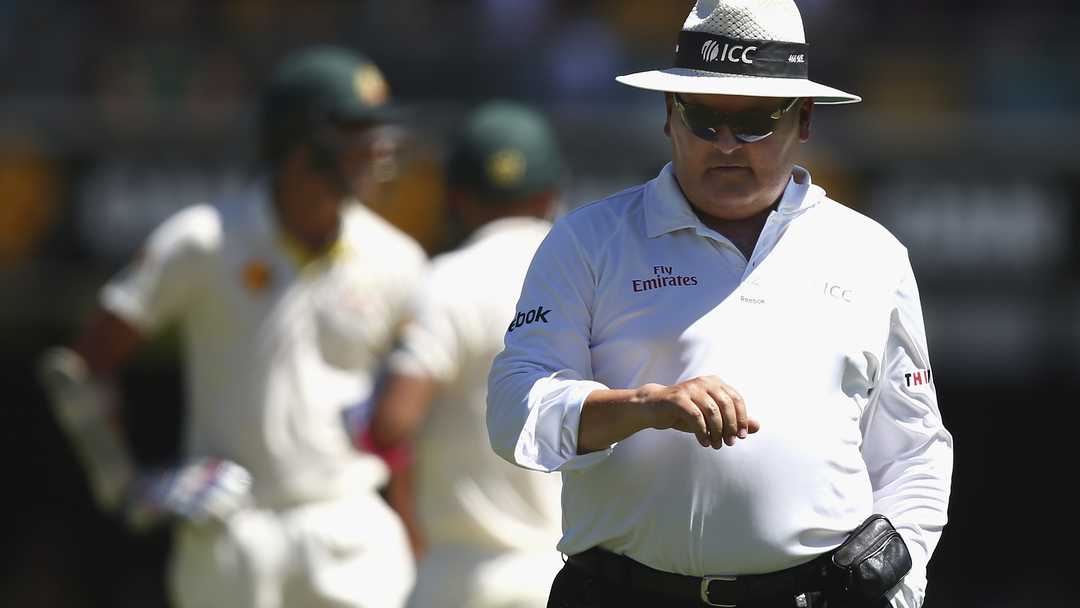
In Marais Erasmus' first international, a T20I between South Africa and Australia at the Wanderers in February 2006, Ricky Ponting changed his field immediately after six overs had been bowled. It was the end of the powerplay. Or so Ponting thought. The match was only the sixth men's T20I, and playing regulations for the format were still fluid. In that series, the powerplay lasted seven overs. Ponting didn't know that.
"I told him, 'No – one more over,'" Erasmus says. "He said it's six overs. He was a fighter and he wanted to argue about it. I told him the regulations said seven overs. He hadn't read them."
The match was the 351st of the 560 Ponting would play for Australia, and his 145th as their captain. He was 11 years into his international career. Ponting was a giant of the world game. Erasmus was on debut.
"As a junior umpire you might think, 'Maybe it is six overs. He's Ricky Ponting – surely he knows what he's doing.' But I knew it was seven. I had studied the regulations. You learn all those lessons, and you learn to stand your ground."
Erasmus's ODI debut, for two matches between Kenya and Canada in Nairobi in October 2007, came about in odd circumstances. Darrell Hair had been pencilled in to stand in those games, which would have added to their significance in the wake of the 2006 Oval Test between England and Pakistan.
On the fourth day of that match, Hair and Billy Doctrove determined that the Pakistanis had tampered with the ball and docked them five penalty runs. The Pakistan dressing room was enraged, and their players refused to take the field after tea. Thirty minutes after play was due to resume, the umpires lifted the bails and declared the match over: Pakistan had forfeited. The Pakistanis emerged 25 minutes after that, but were told they were too late.
Almost a month later, the ICC cleared Inzamam-ul-Haq of ball-tampering. But he was found guilty on the charge of bringing the game into disrepute for not returning to the field. Inzamam was banned for four ODIs. On the same day, the ICC cited security concerns for removing Hair from the list of umpires for the Champions Trophy in India.
In terms of cricket's laws, the umpires were correct at the Oval. But the affair was poorly handled and reinforced the narrative among Pakistan's supporters that they always got a raw deal.
Hair emailed the ICC after the match to say he would resign from the Elite Panel in exchange for $500,000, which he said was meant to cover loss of future earnings. Two days later Hair retracted the offer, but the damage was done.
Before the Oval Test, the ICC ranked Hair as the world's second-best umpire with a decision-making success rate of 95.5%. But that no longer mattered, and in November 2006, Hair was barred from officiating in internationals until the end of his contract.
"I think we owe Mr Hair the courtesy of allowing his future to be discussed by him with our management before we go anywhere further," Percy Sonn, the ICC president, told a press conference. That seemed to clear a path to restore Hair.
He stood in three ODIs in Mombasa in January 2007, part of an associate triangular series featuring Kenya, Scotland and Canada. Hair also umpired in four ODIs in Nairobi later that January and in February, and one in Toronto and three in Belfast in July. But this was not the manner to which he had become accustomed. So when the ICC asked him to return to Nairobi in October 2007…
"He was supposed to do those ODIs, but he said, 'I'm not going back to Kenya,'" Erasmus says. "So they called me – 'Can you do those games?' I said fair enough, and Kenya versus Canada was my ODI debut."
Hair went through a litigious phase, saying in February 2007 that he would sue the ICC and the PCB for race discrimination. He is white and copped much of the flak from the Oval incident. Doctrove is black and did not.
It was Hair who launched the exclusively Australian umpiring vendetta against Sri Lankan off-spinner Muttiah Muralitharan, who he called for chucking seven times during the 1995 Boxing Day Test. Donald Bradman slammed that as the "worst example of umpiring that I witnessed, and against everything the game stands for."
Hair dropped his legal challenge against the ICC and the PCB in October 2007. He made it back to Test cricket in two matches between England and New Zealand in May and June 2008, but they were his last appointments at that level.
The headlines last featured Hair in October 2017, when an Australian court heard his admission of guilt on charges of embezzlement and theft of more than AUS$9,000 from the liquor store at which he worked. Hair said he had been compelled to steal the money by a gambling addiction.
The chasm that yawns between Marais Erasmus and some of his peers proves the point. That doesn't mean Erasmus has lived a quiet, uneventful life. Far from it. But he has lived it better than most.
Marais Erasmus: The Rock 'n Roll Years; Cricket in an Umpire's Orbit by Telford Vice is available as an ebook on Naledi and will be published in hardcopy on June 15.
Related Posts
 Japan vs Nepal, 5th Match, Group A, Asian Games 2026
 Deshpande, Kamboj wreak havoc to hand India A 1-0 lead
 CWI slashes international player fees by 25% in sweeping overhaul