


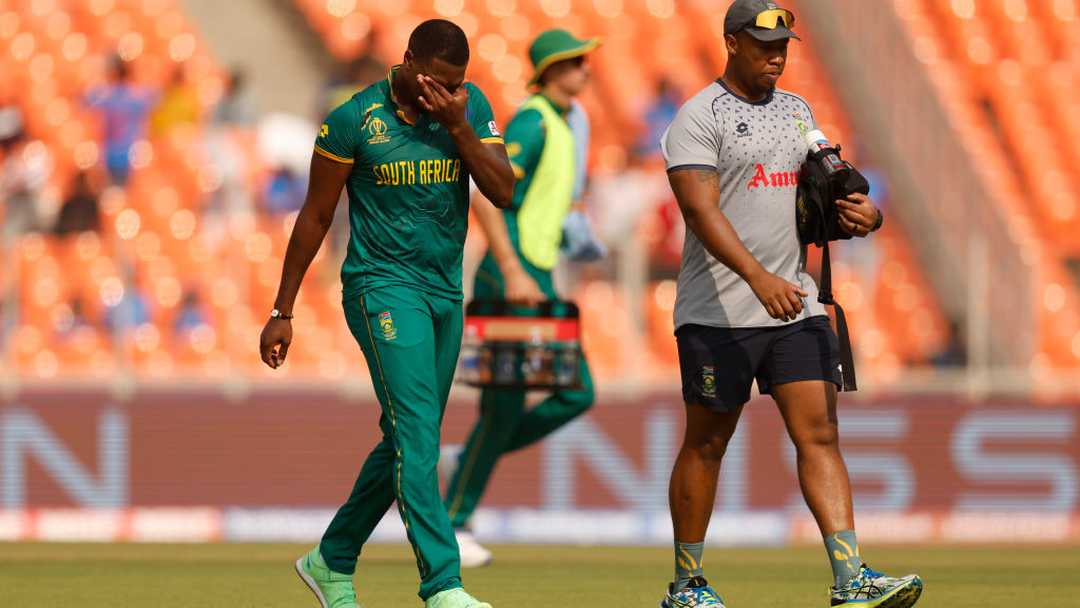
South Africa’s Fast‑bowling Hamstring “Hamdemic”
The problem
- Five SA pacers – Kagiso Rabada, Lungi Ngidi, Kwena Maphaka, Ottneil Baartman and Lutho Sipamla – have suffered hamstring injuries in the last few weeks.
- All except Sipamla were in the squad for the ODI series against Australia that began at Kingsmead.
Medical perspective
- Hashendra Ramjee, CSA’s chief medical officer, says hamstring injuries in fast bowlers are rarely caused by a single factor.
- Key risk periods:
- Pre‑season conditioning – e.g., Rabada’s injury.
- Early domestic first‑class matches – Ngidi and Baartman.
- Winter high‑performance work – Maphaka.
- Transition phases (rest → early training → high‑speed running) create vulnerable windows.
- A history of previous injuries raises the risk further.
Monitoring & workload management
- Players wear GPS monitors that track acute‑chronic workload ratios.
- When metrics enter “danger zones,” the medical team intervenes (reduce load, increase rehab, etc.).
- CSA now plans annual ball‑count targets rather than series‑by‑series, aiming to spot early warning signs and manage bowlers’ yearly workload.
Comparison with Australia
- Australia treats its pacers as “valuable relics,” rotating them to preserve freshness:
- Pat Cummins (33) likely to miss two of three ODIs in SA to stay fresh for the Tests starting 9 Oct.
- Mitchell Starc (36) missed the three ODIs in Zimbabwe en route to SA.
- Josh Hazlewood (35) played only one of those games.
- Ramjee acknowledges the lesson: science‑driven workload management combined with full buy‑in from coaches, players and support staff.
Take‑away for CSA
- Identify transition periods and adjust training loads accordingly.
- Use GPS data to keep acute‑chronic ratios within safe limits.
- Adopt a calendar‑year ball‑count model to prevent cumulative overload.
- Learn from Australia’s rotation policy to protect senior pacers ahead of key series.
The fast‑bowling cohort remains the most injury‑prone group in cricket; proactive, data‑backed management is essential to curb the current “hamdemic.”
Related Posts
 Rizwan’s curious case: Midnight summons, confiscated phone, and a probe shrouded in questions
Rizwan's Curious Case: Midnight Summons, Confiscated Phone, and a Probe Shrouded in Questions Mohammad Rizwan
 Shubman Gill cops blow to right elbow in nets
Shubman Gill suffers right‑elbow injury in nets While practicing in Thiruvananthapuram ahead of the first