


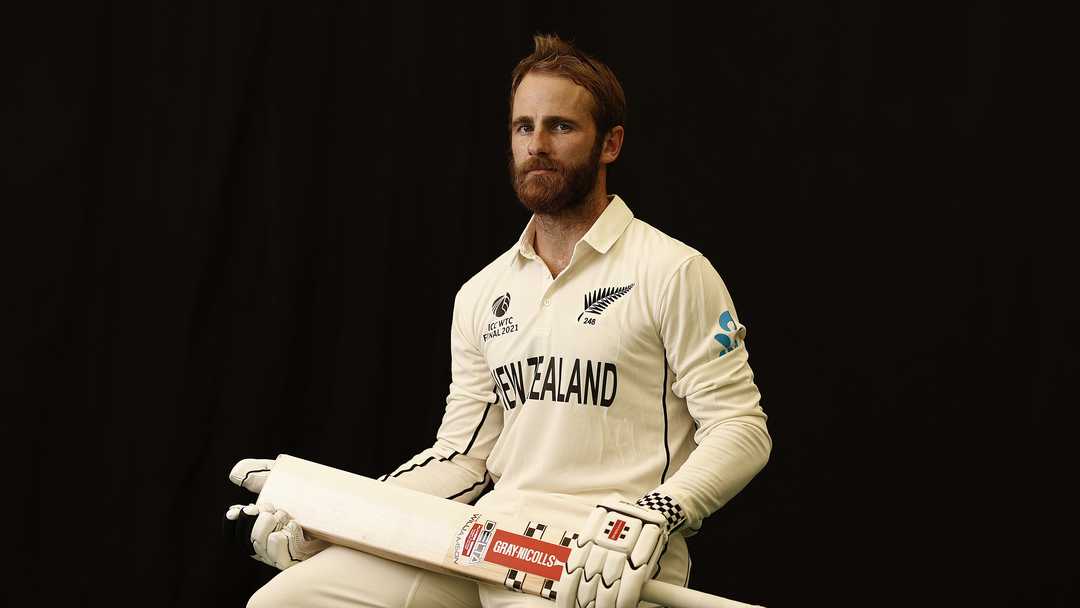
The space Kane Williamson found
There was a lot to like about Kane Williamson.
There were the drives, as complete as any in his generation. There was the backfoot play against spin, evident from the moment he first took guard in Motera and looked oddly unhurried with four men around the bat. There were the sweeps, the nudges and the late adjustments. There was the captaincy that took New Zealand to places it had never been before: a World Test Championship title and two white-ball World Cup finals.
There was also the person. The player who lost a World Cup final on boundary count and responded without an iota of bitterness. "It certainly wasn't just one extra run," Williamson had said after the loss at Lord's in 2019, refusing to reduce the most dramatic final the game has known to a freak deflection and a quirk of the playing conditions, and finding grace in a moment that would have justified outrage.
But for some of us, the enduring image of Kane Williamson will remain something much smaller. A ball outside off-stump, a slightly open bat face, and an opposition captain no longer certain that third man could be left vacant.
Of Williamson's 5,677 Test runs against pace, 1,377 came behind point on the off-side. Among the Fab Four, only Joe Root scored more runs in that region, and Root did so while playing 49 more Tests. Williamson's control percentage there stood at 77 percent, only marginally behind Root's.
The numbers are impressive, but what made the runs memorable was not how many were scored through the region, but how they were scored.
Test cricket encouraged you to leave balls outside off-stump. Unless you were a flamboyant batter, which Williamson wasn't. Still, nearly a quarter of his runs against pace in Test cricket came behind point on the off-side, most of them scored deliberately and harvested off deliveries that conventional wisdom insisted were best ignored.
There were many ways he got those runs. Sometimes he cut with soft hands, bunting the ball into the ground in front of the packed slip cordon rather than flaying at it. Sometimes he glided, his stance closing, his feet turning clockwise and his wrists uncocking just enough to guide the ball fine. Sometimes he seemed to be just dead-batting the ball before opening the bat face at the last instant. And other times, it was a half-leave, one of those curious Williamson strokes that left you wondering whether he had meant it all along.
Williamson himself did little to clear up the mystery. When one such stroke beat a waiting short third man for a crucial boundary in a 2019 World Cup chase against South Africa, he would later claim that he had only been looking for a single.
The common thread running through all those runs behind point was always the same. The hands. They were soft enough to absorb pace, strong enough to control angle and bounce, and quiet enough that you barely knew how quickly they were adding runs to New Zealand's total.
The shot felt fitting for the player who played it. Like those runs behind point, Williamson's career often unfolded away from the centre of attention. While Virat Kohli, Joe Root and Steve Smith occupied the game's biggest stages more regularly, Williamson would be scoring runs in Christchurch or Hamilton while the conversation happened elsewhere, quietly building a record that demanded the same respect.
His retirement, in many ways, felt characteristically Williamson. There were still runs left to make. He was 485 runs short of the 10,000 milestone in Tests, with two more matches in England and a blockbuster summer against India and Australia still to come. But when Williamson explained his decision, he spoke less about what he might still achieve and more about what the team might become. He spoke about making space. Space for the next player, space for the team's future, space for what comes next.
In a way, he had spent much of his career doing exactly that. Making space. A packed cordon became a gap because the designated third man would be busy manning the fourth slip. And a delivery that seemed destined to end as a dot ball somehow found its way behind point.
There were certainly more spectacular shots in Kane Williamson's repertoire, but it was those soft-handed runs behind point that seemed to capture him best. They asked for little attention and gave a great deal in return, much like Kane Williamson himself.
Related Posts
 Deshpande, Kamboj wreak havoc to hand India A 1-0 lead
 CWI slashes international player fees by 25% in sweeping overhaul
 How moving down helped Shai Hope move forward